




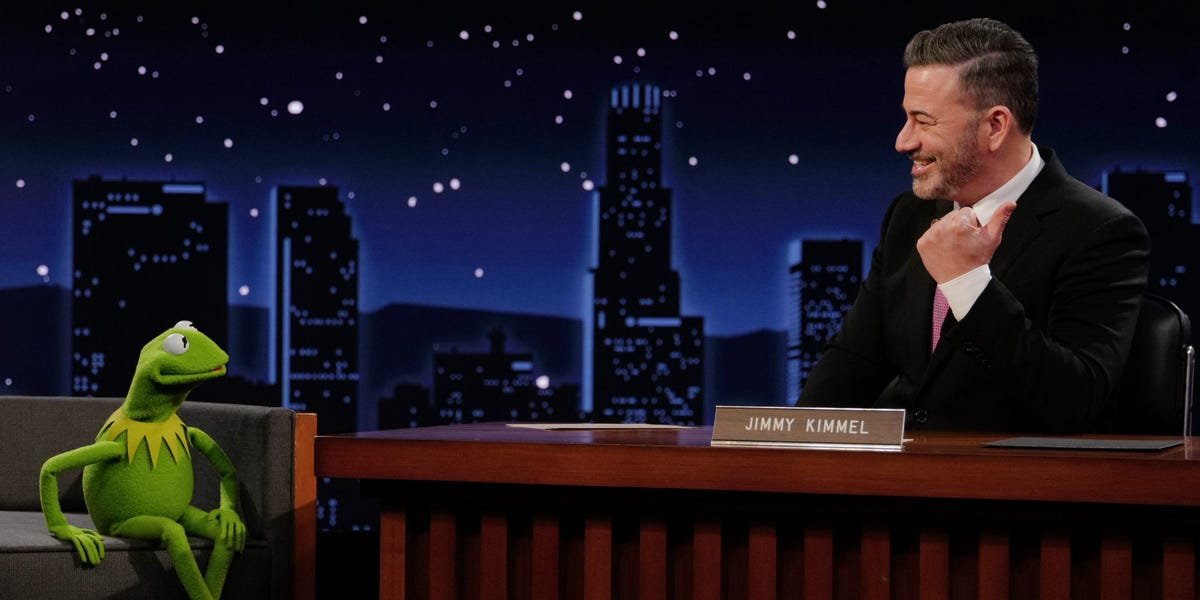


The federal government says it’s going to review ABC’s broadcast licenses — a move that came a day after Donald and Melania Trump both called on ABC to punish Jimmy Kimmel.
What does that mean for Kimmel and everything else that airs on ABC?
For now, nothing. But that doesn’t mean it doesn’t matter.
Unlike last fall, when Donald Trump and his administration also went after Kimmel, his show remains on the air. (Kimmel responded directly to the Trumps during his Monday night show, but didn’t reference the license review during his Tuesday night monologue.) Everything else on ABC remains unchanged.
And if you zoom out, there are decent odds that things stay that way. Media and legal observers think Disney, which owns ABC, has a strong legal case against Trump’s Federal Communications Commission, which is telling Disney it needs to renew its licenses for the eight broadcast stations it owns now, instead of waiting until 2028 when they’re officially due for review. It would be difficult, they say, for the FCC to permanently revoke those licenses in a way that would withstand court challenges.
And Brendan Carr, the Trump-appointed head of the FCC, knows all of that. But he also knows that using his power to drag Disney and ABC into a regulatory and legal fight is the whole point. The end result doesn’t matter as much as the signal it sends.
As Tom Wheeler, who held Carr’s job during the Obama administration, told the Guardian, that signal is pretty clear: “There’s a message to every licensee of the FCC that says, ‘I can do this to you too.'”
It’s a message that Carr has been broadcasting for some time, with his repeated assertions that broadcast licenses aren’t a right and can be revoked. Ditto his existing investigations into Disney and Comcast, which are, in theory, about their previous embrace of DEI policies.
Yes, there’s a theoretical chance that Carr’s orders and investigations will eventually lead Disney or Comcast to lose broadcast licenses. That would be bad for both, though not catastrophic, because owning broadcast stations isn’t core to either company’s business. (Contrary to what Donald Trump often suggests, big media companies don’t own a single overriding license that lets them distribute programming — it’s individual broadcast stations that have licenses. Some of those stations are owned by big broadcasters like ABC, but the majority are owned by outside companies.)
But that still means Disney will have to spend time and money pushing back against the federal government.
The bigger problem for Disney, or any other media company in the Trump administration’s sights, is that losing a license is just one bad outcome the administration could engineer. For instance, the FCC could try to pressure other broadcast station owners not to carry Disney’s programming, which is effectively what Carr was pushing last fall, when he applauded Sinclair and Nexstar, two very big station groups, for their decision to temporarily drop Kimmel.
And the administration can also weigh in, or threaten to, when it comes to other things media companies want to do. It blessed Larry and David Ellison’s purchase of Paramount, for instance, only after the Ellisons had agreed to steps like appointing an ombudsman with conservative credentials to monitor complaints about CBS News.
Which is why any real changes the investigation spurs may never result in some kind of documented, formal change about the way Disney or ABC does business. You may simply have to wonder why ABC canceled a particular show or promoted another one. Is that something they would have done if Donald Trump weren’t in office?
We’re two days into this one, and so far, there’s no sign that new Disney CEO Josh D’Amaro has made any moves to appease Trump and Carr. Kimmel is still on the air, and Disney has put out a statement saying it deserves to keep its licenses and assumes it will. (I’ve asked Carr and Disney if they have anything else to add.)
The problem is we don’t really know what the real effect this pressure has — just that it’s something D’Amaro and his employees have to think about, at the very least. And that’s something that should worry anyone who cares about the government’s influence on what we watch.
Read the full article here