








Jensen Huang’s latest comments on China’s approach to artificial intelligence are stirring debate on Chinese social media.
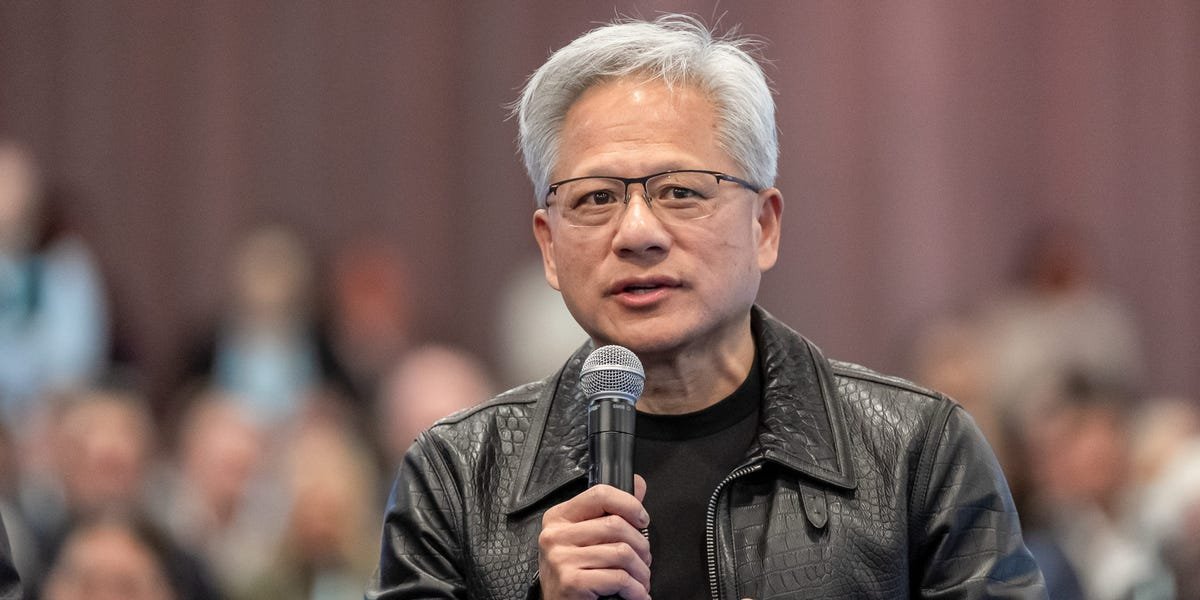
Speaking onstage at the All-In Summit in Los Angeles on Monday, Huang said that people in China don’t talk about AI doom in the same way as people in the West.
“The narrative is much more practical. Nobody in China is saying that there’s end of this, and end of that, and cataclysmic this, and doomer that,” Huang said during the conversation with David Sacks.
The Nvidia CEO said he saw no purpose in engaging in this kind of apocalyptic talk.
“We’re making it up. The part that is frustrating is if it was true, then we ought to talk about it and go do something about it,” Huang said, instead of “worrying a bunch of people who can’t do anything about it.”
On Weibo, China’s version of X, internet users pushed back on Huang’s characterization. The message: the AI doom debate is alive, and red hot out here.
Weibo users have thoughts on AI doom
The Nvidia chief’s words drew mixed responses under the hashtag “Jensen Huang says no one in China is talking about the AI apocalypse,” which was viewed more than 14 million times at press time.”
“To say Chinese people don’t talk about an AI apocalypse is simply untrue,” a tech commentator in Beijing wrote on Weibo. “Refraining from always defaulting to doomsday scenarios doesn’t mean we neglect safety research to prevent that from happening. Prioritizing practical applications doesn’t mean we aren’t afraid of what happens if we skip rigorous safety validation.”
“China is not a monolith,” another Weibo user from Beijing wrote. “The impact of AI on human life is something that demands thorough reflection and discussion. Dialogue on whether we’re heading toward an apocalypse or not is happening, and must continue to happen.”
Some users said they, too, were concerned about the laws governing AI superintelligence, with one user from Jiangsu writing that “regulation is urgently needed.”
Others agreed with Huang that AI doomerism has received less attention in China, but said that was because the country’s tech sector is focused on keeping pace with the West.
“Chinese people recognize and discuss the risks of AI. But we also understand the principle that once the bow is drawn, there is no turning back. In Asian culture, we value resilience and strength,” another Beijing-based tech blogger wrote. “When it comes to competition, there is only a yearning for first place, not a fear of ruin.”
“We’re already struggling to catch up with the US. Who has time to think about these things?” one user from Shandong wrote.
Anxieties abound
Other Weibo users said the conversation around AI risks in China is more limited because people are more focused on the technology’s immediate effects.
“Yes — perhaps, an AI-wrought apocalypse looms in the distance,” one tech commentator from Tianjin wrote. “But not always bringing up the ‘apocalypse,’ specifically a rogue, killer AI, doesn’t mean there’s no apocalyptic anxiety. That anxiety is scattered across daily life. That anxiety looks like 70 people receiving layoff notices on the same day.”
“Every day already feels like the apocalypse. We’re so exhausted we’re practically ready to drop dead,” one Weibo user from Beijing wrote.
Want more Business Insider in your news feed?
Add BI in Google so our reporting is easier to find when you’re searching for what matters.
Comment moderation and censorship
Others said there’s limited space for open discussion about the technology’s risks.
“It’s not that no one talks about it, it’s that when they do, they get censored,” another user from Beijing wrote.
Business Insider could not independently verify whether posts about AI were being censored or deleted, but Weibo and other Chinese social media platforms have strict monitoring systems in place, in line with the Chinese government’s guidelines on comment moderation. Sina, Weibo’s parent company, did not respond to a request for comment from Business Insider.
It’s not all doom and gloom. Some Weibo users did agree with Huang, and downplayed the prospect of an AI apocalypse, describing those fears as either far off or overstated.
“Chinese people have a historical view of development. Over the long course of history, every era is part of that history and changes with social development. Nothing begins abruptly, and nothing ends suddenly,” one user from Hubei wrote.
AI fears are going global
Huang’s comments come amid a broader debate over whether the companies building increasingly powerful AI can keep the technology under control.
As AI leaders including Dario Amodei, Sam Altman, and Elon Musk warn that the race may be outpacing its guardrails, the AI doom discussion is also playing out in China.
Earlier this week, a Weibo discussion tagged “China AI, US AI” brought together a familiar mix of concerns: what AI could mean for jobs, whether China can keep pace in the global race, and whether Silicon Valley’s safety warnings are really a way to slow China down.
Those concerns have also become for a DeepSeek engineer, whose essay about AI’s potential to outdo him at his own craft went viral.
The essay — a poignant piece on how talented people at China’s frontier labs are navigating the risks of being replaced by AI — went viral both inside and outside China.
Read the full article here