







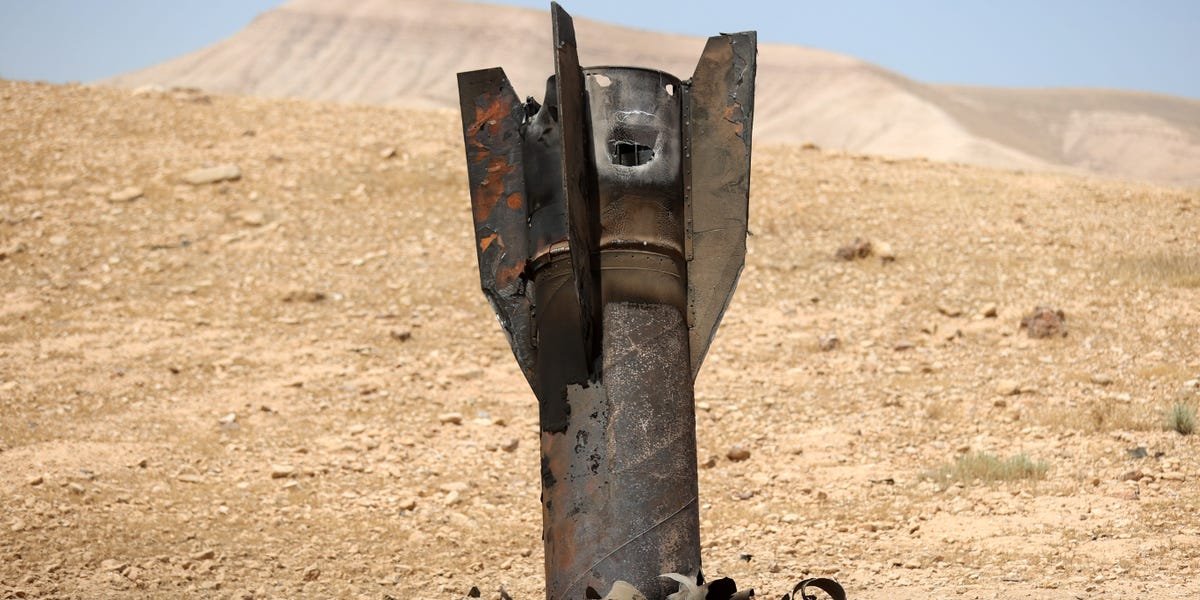


Multiple rounds of fighting with Iran brought with them a realization that Israel needs significantly more ballistic missile interceptors than it ever expected.
A senior Israeli defense official told Business Insider that past assumptions about the number of interceptors required to sustain its defenses in a high-intensity conflict, even theories from a couple of years ago, have been tossed out the window.
“Everybody now understands differently,” Moshe Patel, the director and general manager of the Israeli Missile Defense Organization, said in a recent interview, adding that the focus must be on producing more interceptors to fill stockpiles.
Israel’s top ballistic missile defense, the Arrow system, uses a two-stage solid-fueled interceptor developed by the state-run Israel Aerospace Industries and American defense firm Boeing to engage threats.
There are two interceptors in service: Arrow 2, deployed in 2000, can eliminate missiles in the upper atmosphere, while Arrow 3, deployed in 2017, can eliminate missiles in space. It is one of the few air defenses in the world capable of this feat.
Israel is also developing next-generation Arrow 4 and 5 interceptors.
Arrow has been used extensively to defend Israel over the past three years, including over four rounds of fighting with Iran, during which the system battled hundreds of ballistic missiles.
Israel’s defense ministry said in early April it plans to accelerate production of Arrow missile interceptors, although it did not specify any figures. Israeli officials have denied reports that the country is running low on interceptors.
Patel described these efforts as “a race” against Israel’s enemies, who have a high production capability. The Trump administration said in early March that Iran could make more than 100 ballistic missiles a month. However, American forces have carried out extensive strikes in the months since to degrade Tehran’s missile program.
Israel’s efforts to boost its stockpiles come as ballistic missile interceptors — especially those for the US-made Patriot air defense system — are seeing high demand around the world.
Global stockpiles were already under stress, and air defense battles in the Middle East have only compounded these concerns. The US military and the defense industrial base are, however, trying to curb these strains by dramatically ramping up Patriot interceptor production.
Israel has used data from each round of fighting with Iran to inform and shape its ballistic missile defense more broadly.
Each clash has forced a different reaction, Patel said. During the first round, in April 2024, for instance, Israel was forced to combat roughly 100 missiles all at once. Months later, in October 2024, Iran launched an even larger salvo.
Israel fought waves of Iranian ballistic missiles in June 2025 during the 12-Day War. And the most recent conflict, dubbed Operation Epic Fury by the US and Operation Roaring Lion by Israel, lasted far longer.
“You need to act differently in different cases,” Patel said of Israeli air defenses across the fighting.
Israel maintained a high missile interception rate — over 90% during recent combat operations — over the past two years. “We didn’t see a huge difference, but I can tell you that things were improved from fight to fight,” Patel said.
Air defense data has also helped to inform how Israeli systems work alongside their American counterparts. Patel said each interception is reviewed with the US.
These lessons from the recent fighting, he said, will serve for “many, many years.”
Read the full article here