





August 3, 2026 2:42 pm EDT
|
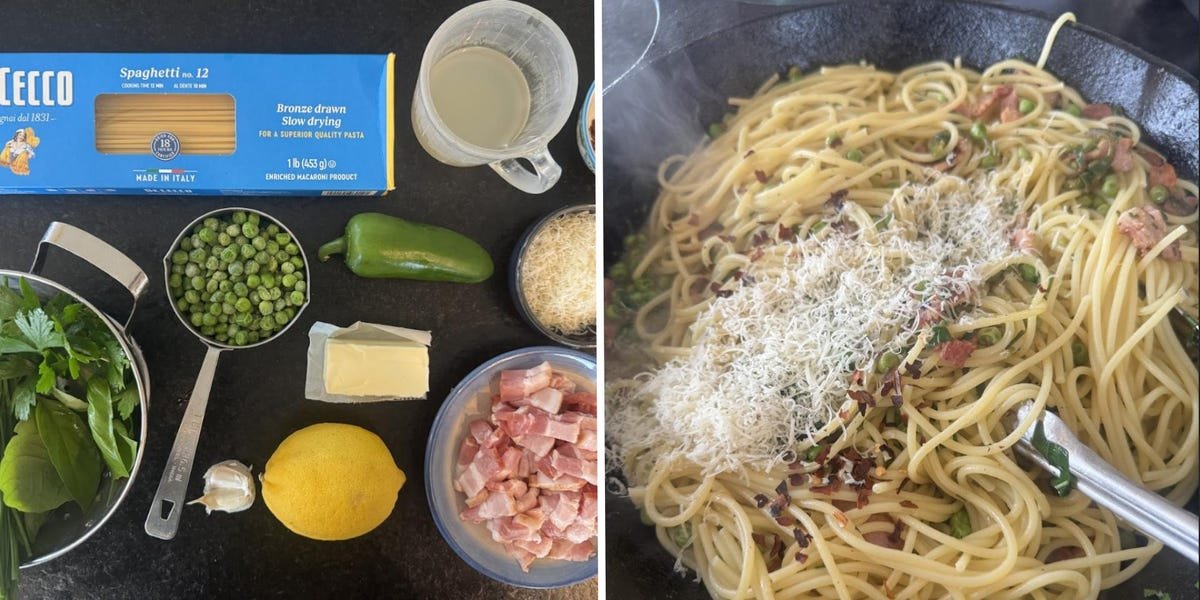
After trying Gordon Ramsay's recipe out for myself, I can agree that this pasta dish is Michelin-worthy.
  • I tested out Gordon Ramsay’s easy, 10-minute pasta recipe, which includes pancetta and veggies.
  • Although the prep time took longer than I’d hoped, the meal still came together in just 20 minutes.
  • The sauce reminded me of carbonara, and I loved the flavor enough to add this recipe to my rotation.

Gordon Ramsay’s meals always look delicious, but I’m never quite sure how easy it will be to replicate his Michelin-starred cuisine in a home kitchen.

That’s why his 10-minute pasta recipe caught my eye. A fancy pasta loaded with pancetta and veggies that comes together in under 30 minutes? Yes, please.

I’ve been on the hunt for a new, easy, celebrity-chef-backed weeknight meal, so I put the recipe to the test. Here’s how it went.

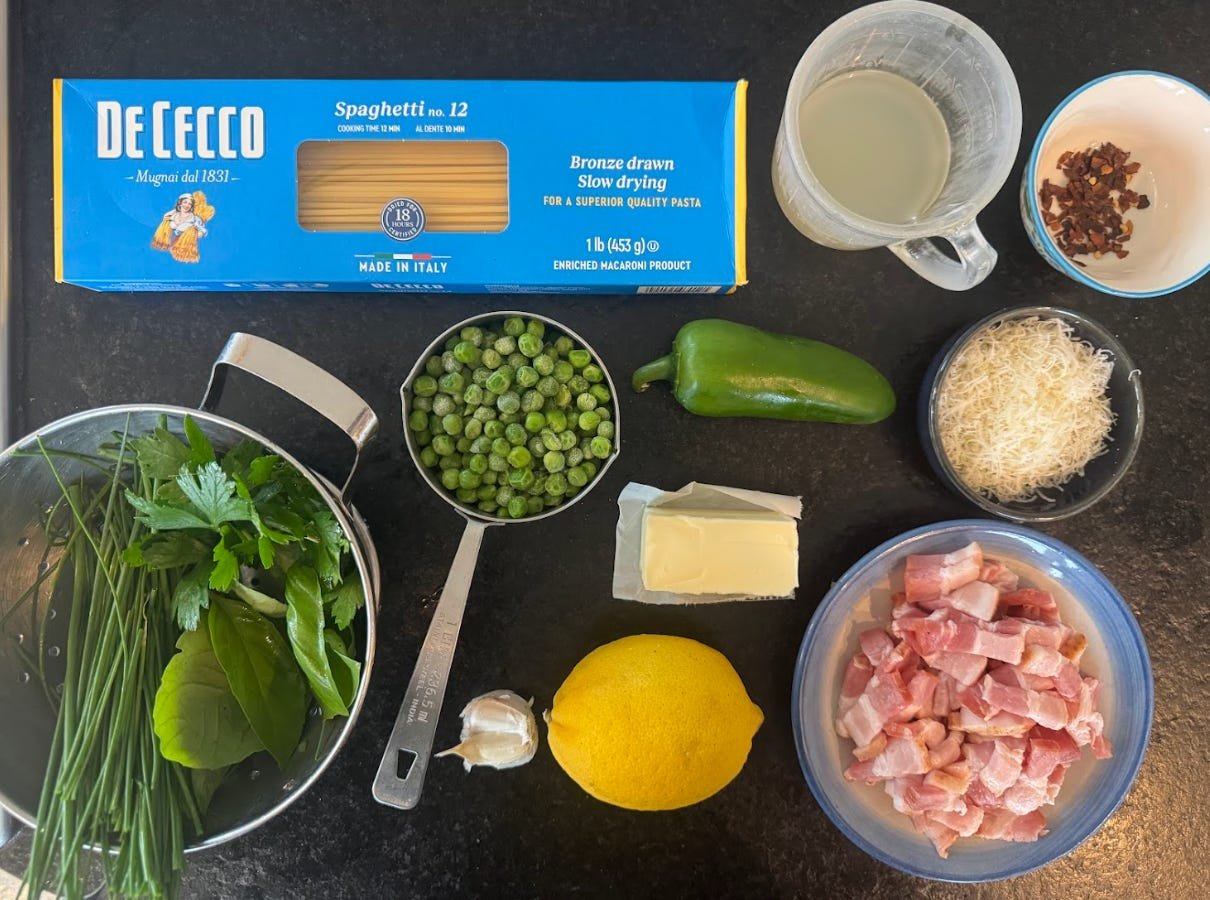
The pasta calls for 15 ingredients, and I already had several in my fridge.
caption TK

This recipe shares a few ingredients with classic pasta carbonara, but the result is something altogether different.

The base of the sauce is made by rendering out the fat from pancetta lardons (you could also use thick-cut bacon) and adding garlic, a chile pepper, frozen peas, and a mixture of fresh herbs.

The sauce is rounded out with vegetable broth, butter, plenty of lemon juice and zest, and starchy pasta water. Finally, the recipe calls for crushed red pepper flakes and Pecorino Romano (or grated Parmesan) as toppings.

Although pancetta and Pecorino Romano are both carbonara mainstays, the peas, lemon, herbs, and spicy pepper land this dish in a category of its own.

Preparing the ingredients took more time than I expected, but the sauce came together quickly.
caption TK

This recipe took a bit more prep work than I anticipated.

Some of the steps were simple (I used frozen peas, after all), but it did take some time to slice the pancetta, zest and juice the lemon, grate the cheese, chop all of the herbs and pepper, and measure my broth and butter.

To cut back on prep time in the future, I’d go with pre-grated cheese and pre-chopped pancetta lardons.

After prepping all my ingredients, I added a pound of spaghetti to a large pot of salted boiling water, then started cooking the pancetta in a large skillet. (Make sure you use one that’ll be big enough to hold all the pasta at the end.)

Next, I cooked all the ingredients in one skillet.
caption TK

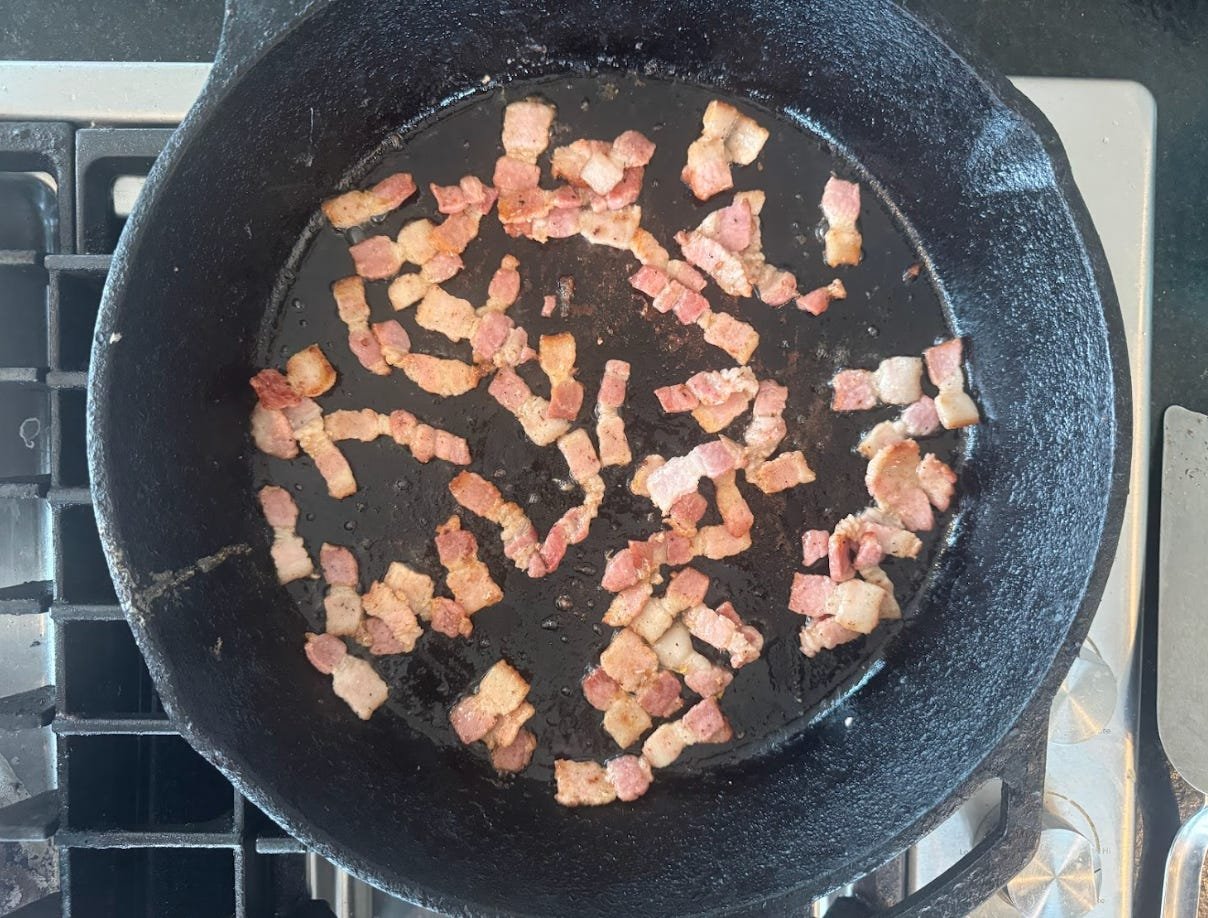
The key to getting the meat crispy — and rendering out as much fat as possible, which will contribute to the sauce’s richness — is not to blast the heat.

Ramsay recommends medium heat, and though it was tempting to nudge my stove toward medium-high or even high, I knew that a slower, lower-heat cooking process would yield better results.

Thankfully, because the pancetta was sliced into lardons (a fancy term for bite-sized pieces), it only took me about four minutes to render out the fat.

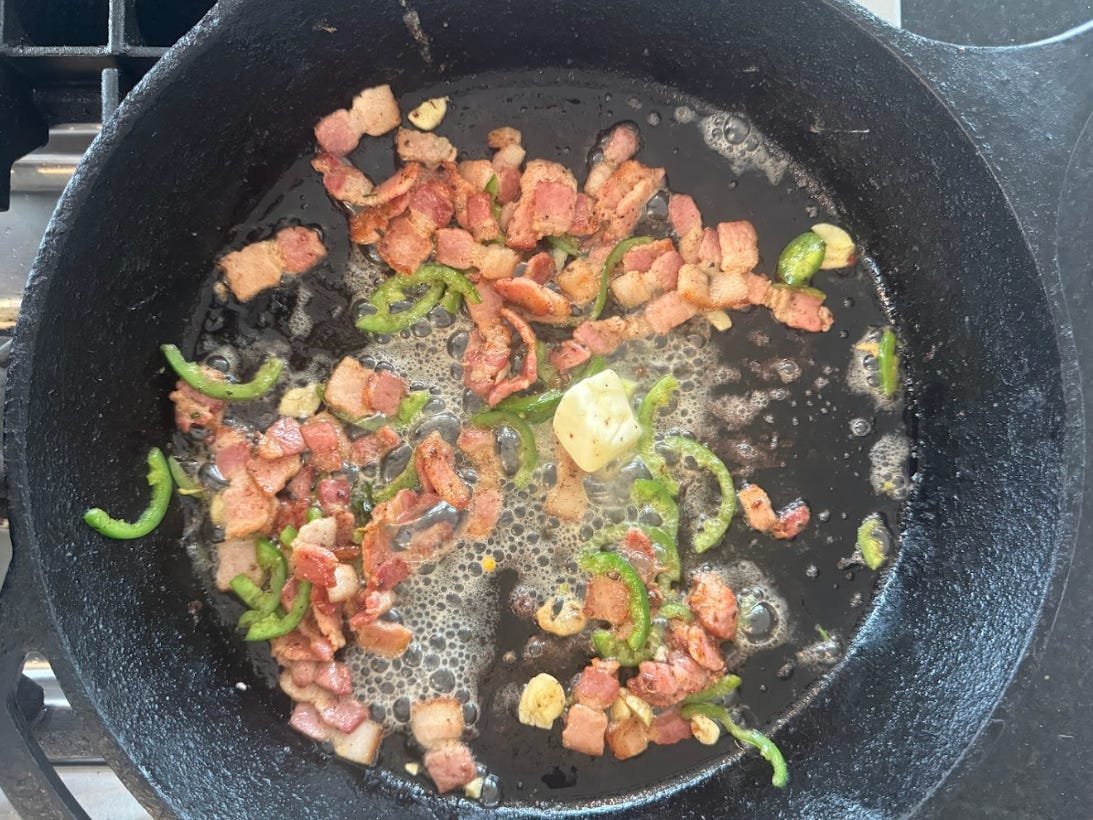
After that, things started moving quickly. I sautéed the garlic and pepper in the pancetta fat for about a minute until I could smell the spice and allium cooking. Then, I melted a knob of butter and tossed in the peas and chopped herbs.

These green ingredients cooked very quickly (even though the peas were still frozen), so I didn’t want to leave them in the hot skillet for too long before adding the vegetable stock and more butter to cool things down.

I remembered to save pasta water before adding my spaghetti to the skillet.
caption tK

I felt the urge to drain the entire pot of spaghetti in a colander when the noodles reached al dente — but with this recipe, saving about a cup of pasta water was key to achieving a silky-smooth sauce. (The recipe calls for about ¼ cup of pasta water, but I chose to save a bit more.)

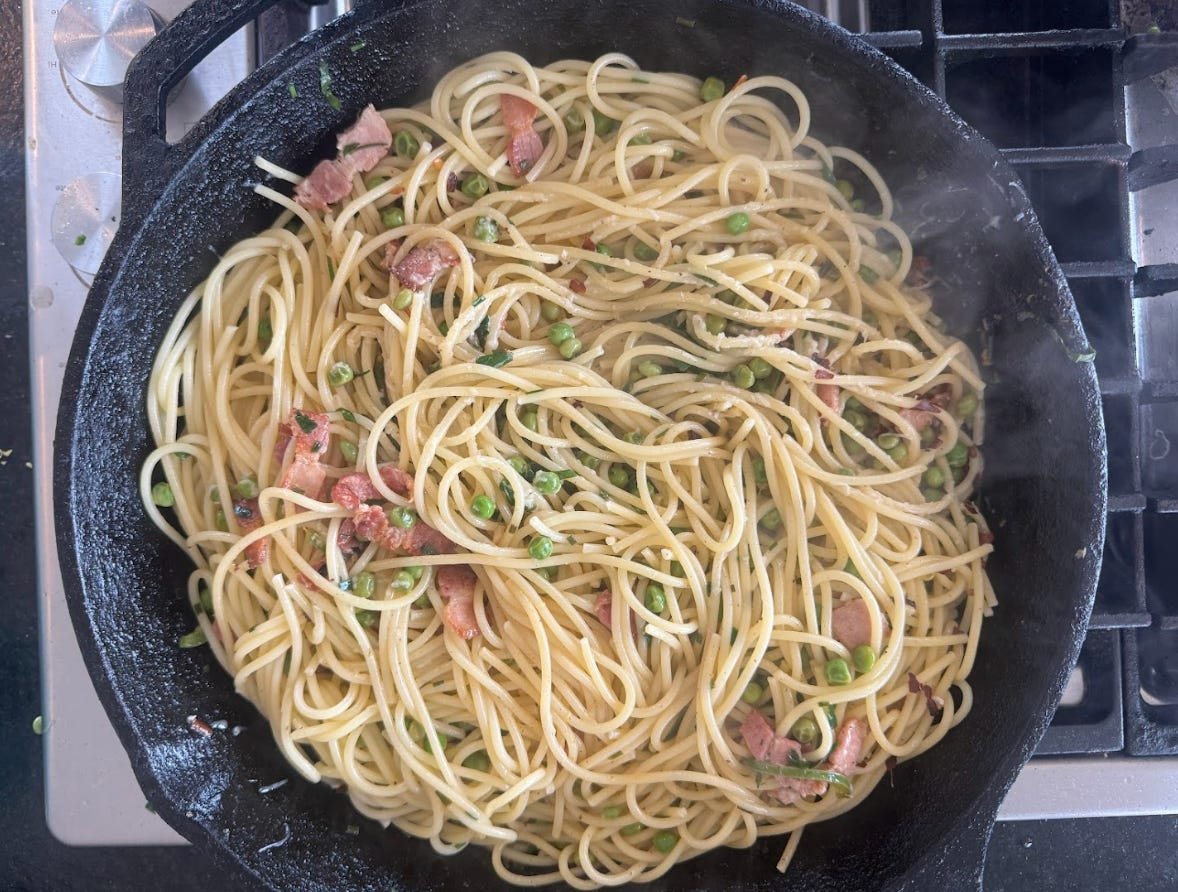
After draining the pasta, I squeezed lemon juice and zest into the skillet and added a splash of the water, too. Then, I poured in the cooked noodles and gave everything a big stir.

I served the pasta immediately to keep the peas looking fresh.
caption TK

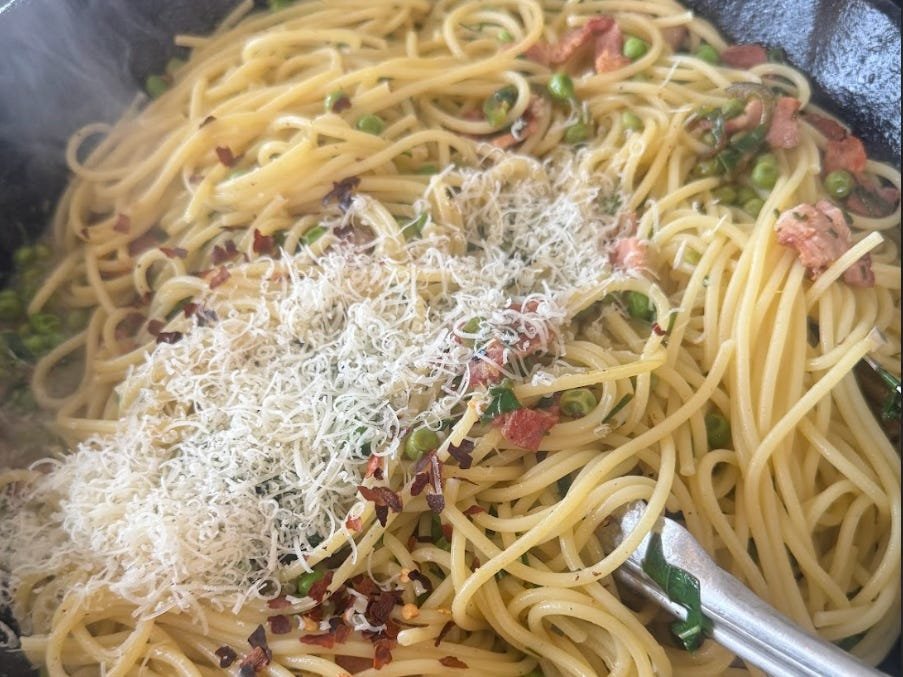
As soon as the dish was seasoned, I served the pasta with pepper flakes on top.

Overall, the dish had a wonderful flavor and texture. The lemon packed a punch, so I ended up adding more salt and a snowfall of creamy pecorino to counter that acidity.

I also found that the crushed red pepper flakes made a nice addition without overwhelming the more delicate flavors.

Admittedly, the entire process of making this dish took closer to 20 minutes — but it was still quick enough (and even Michelin-worthy, according to my inner critic) to earn a spot in my personal cookbook.

This story was originally published on August 29, 2025, and most recently updated on August 3, 2026.

Read the original article on Business Insider

Read the full article here

Share.
Leave A Reply

Exit mobile version