






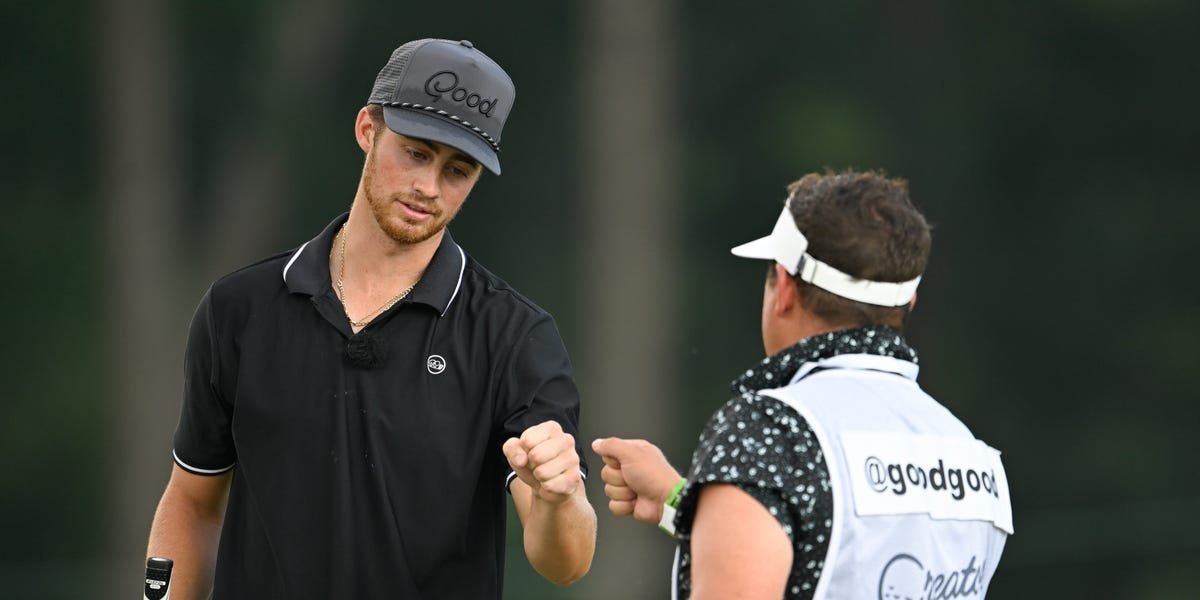


Good Good has seen major fallout from an ad with Callaway that critics say promoted violence against women — but creator economy insiders say there’s a road to recovery.
Last week, Callaway cut ties with Good Good, Dick’s Sporting Goods pulled its products from shelves, and the YouTube golf group stepped back from its title sponsorship of a fall PGA Tour event. A person close to Good Good said two people from marketing were fired.
So, just how bad is the situation?
“We’re going to remember this for years,” said Joe Perello, CEO of Props, a creator marketing company. “They have a long road ahead of them to establish relationships with big manufacturers like Callaway and retailers.” He added that other up-and-coming golf brands are waiting to take Good Good’s place.
The diversified business that had made Good Good a creator success story — and helped it raise $45 million last year — also exposed it to outside partners who didn’t have the appetite to weather bad news.
There could be other shoes still to drop, said Chris Erwin, founder of RockWater, an M&A and strategy advisory firm for the creator economy. For example, Good Good has a partnership with Dude Perfect, aimed at gaining a foothold with younger viewers, that could be at risk.
Still, Erwin and others said all isn’t lost for the brand. Good Good has a war chest, more than 2 million subscribers, and — ironically — a fresh wave of attention after the scandal. It also has a new president, who could help steady the ship.
The channel could double down on its core audience with paid subscriptions, direct-sold products, and live events while it recovers.
“It’s a moment to show who they are,” Erwin said. “If they do that, and advertising comes back, it could be a better business.”
Want more Business Insider in your news feed?
Add BI in Google so our reporting is easier to find when you’re searching for what matters.
Good Good had a brand-friendly image and had rolled out a campaign, “There’s More to Golf,” earlier this year to promote inclusivity and reach new audiences. This ad scandal could severely hamper its efforts to grow its female viewership. Zappi, a consumer market research company, found a sharp gender divide in its ad scoring, with women at least twice as likely as men to feel negatively toward Good Good and Callaway after seeing the promo.
Good Good could shift its branding and adopt a more “outlaw” persona. Or, it could use humor to redeem itself, Perello said.
Self-deprecating humor is “the fastest pathway back to redemption,” he said. “My advice would be, make hay of this and put yourself at the butt of the joke.”
What about the rest of the creator economy?
Creator economy insiders said influencer marketing is too entrenched in the CMO playbook for companies to hit pause because of a single incident like the Good Good backlash.
That said, it could cause some marketers to ensure they have ad-approval systems in place to prevent a similar situation from happening to them.
“It could prompt some brands and their agencies to reassess where they draw the line between creative freedom and oversight, with greater scrutiny of creators and more checks around creative sign-off,” said Ben Woods, head of creator economy at Enders Analysis.
There has been a push-and-pull for years between brands and creators over how much control each should have.
Ultimately, that could mean influencer marketing gets a bit more boring — at least temporarily — as some marketers tighten up the freedom they give creators.
“Creator content will become less authentic,” Perello said. “There’ll be an overcorrection.”
No one who spoke with Business Insider expected it to have any lasting damage on the rise of influencer marketing, however. US advertisers are expected to spend $44 billion on creator marketing in 2026 — up about 18% from 2025, according to a report from the Interactive Advertising Bureau.
Read the full article here