









Living in San Francisco since 2001 is a surreal experience. I arrived a year after the dotcom bubble burst, and the city felt desolate, especially downtown where Credit Suisse was headquartered at 201 Howard Street.
I was coming from New York City, which felt vibrant at all hours, including at 5:15 am when I’d walk from my studio at 45 Wall Street to Goldman’s equities office at 1 New York Plaza. (Still wondering whether stepping over the steam from those manhole covers was a great life choice.)
San Francisco, the cheapest international city in the world, is tame by New York City standards. But I love it for the weather, food, diversity, and entrepreneurial spirit. Just like how many of us seek financial freedom with FIRE, many who come to San Francisco and stay seek freedom of personal expression. It’s a beautiful thing.
You will be accepted in San Francisco for who you are, perhaps more than any other city in the world. And I’ve been everywhere.
San Francisco Became a Punching Bag During COVID
Sadly, San Francisco got dragged through the mud during COVID. It was the city social media and the mainstream media loved to hate. Folks loved to zoom in on the Tenderloin, arguably the worst neighborhood in San Francisco, and declare the whole city a hellscape. It was fascinating, and frankly a little insulting, to watch.
Yes, crime ticked up during COVID, especially car break-ins and shoplifting. But wasn’t that happening everywhere in the country?
It was frustrating to feel helpless as lawlessness spread, with politicians seemingly slow to act. And yes, we had city government corruption. Hard to avoid when you’re running a $14+ billion annual budget.
But here’s what the national outrage machine got spectacularly wrong: the hate online was far worse than reality. I kept getting messages asking if it was safe to visit San Francisco. Meanwhile, I was taking daily walks and drives around the city and it was… just normal life.
As someone who has operated Financial Samurai since 2009, I know intimately how much hate exists online. Comments are not instantly approved after they are submitted because of the offensive and intolerant language that occasionally comes through. During COVID, San Francisco hate from readers who lived elsewhere was coming in multiple times a week.
The gap between perception and reality was enormous. And whenever there’s a perception/reality gap that large, a savvy investor should pay attention. There is always opportunity.
If People Don’t Want to Invest In San Francisco, I Will
The beauty of a market is that there are always two sides. When everyone is running for the exits, someone is selling them their tickets out at a steep discount and vice versa.
Buying Bay Area tech stocks was one approach. Not a pure play, but Google, my favorite quasi monopoly, was attractive when the fear was peaking. I also found exposure to San Francisco-based AI companies like Glean Tech, Together AI, Harvey AI, OpenAI, Flock Group, Anduril, SpaceX, and Anthropic through traditional and public venture capital funds like VCX. if you lived in San Francisco, you got an early heads up of what was coming.
But the easiest pure play on San Francisco? Buying a single-family home in the city to enjoy life and raise a family. It is the safest way to play the AI boom.
I remember the real estate market peaking in 2022 as interest rates shot up and the anti-SF narrative hit full steam. A home I had my eye on since May 2022 – one a Google executive had backed out of at a higher price – came back on the market in May 2023, right at peak doom loop hysteria. By late 2023, I pulled the trigger.
Affording a home you love in San Francisco has always been difficult. The absolute prices are high, the competition is cutthroat, and the amount of wealth being created in this city is obscene. When prices dip, the window is short (1-2 years usually). When prices rise, they tend to rise in step functions through intense bidding wars, not gradually, but in lurches that leave hesitant buyers perpetually behind.
So buying a dream home during the doom loop felt like the S&P 500 train finally slowing down long enough for us to hop on. Because if you never get on, you don’t just miss the ride, you watch the train disappear over the horizon while prices surge out of reach.
For families like ours, it wasn’t just an investment decision. It was a now-or-never moment. Either we buy during a period of fear and uncertainty, or we risk getting priced out permanently, barring some unlikely financial windfall that conveniently lands in our lap.
The Crime Data They Weren’t Telling You
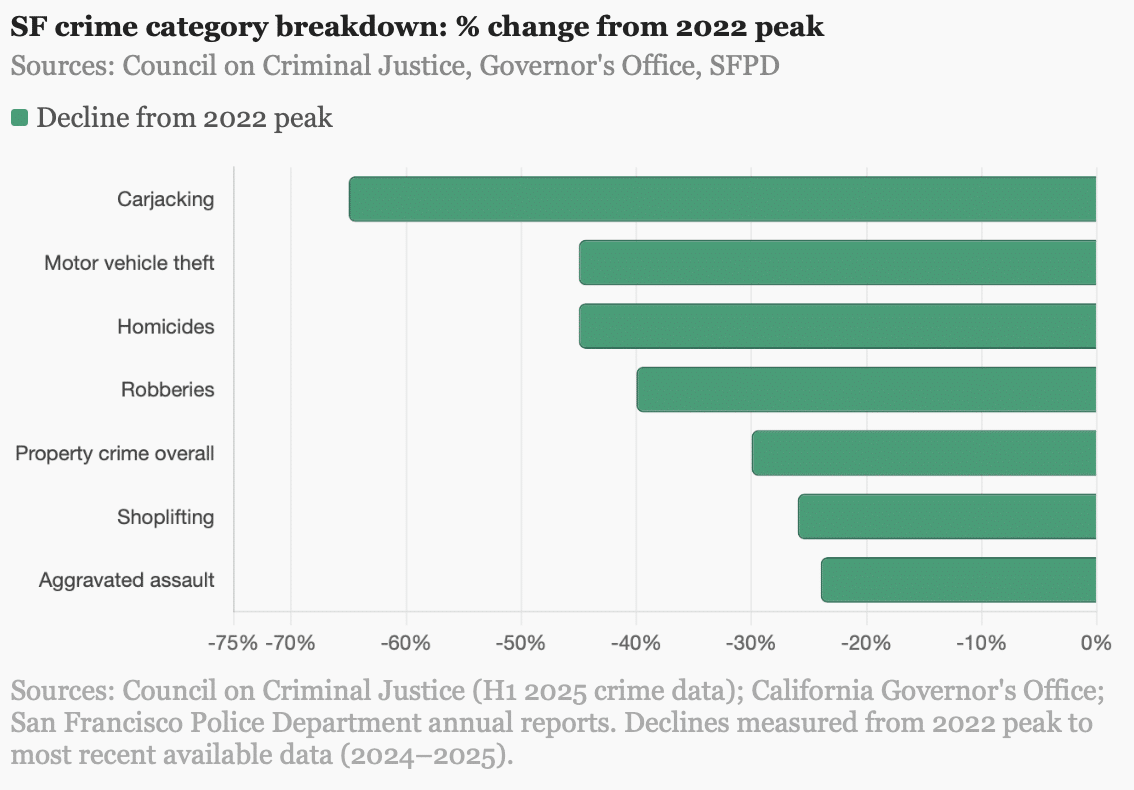
Here’s the thing about the doom narrative: the actual crime data told a completely different story from 2023 onward. Violent crime and property crime both plunged.
The 2024 homicide count of 35 was the lowest since 1961. Property crime dropped 30% in a single year. And by early 2025, violent crime in SF was down 22% year-over-year, the largest decline of any major California city.
The media narrative was running about 18 months behind reality.
By 2025, nearly every category had reversed sharply. And in 2026, the crime stats continue to improve.

The Home Prices They Also Weren’t Telling You
While the doom loop narrative raged, San Francisco real estate was quietly staging one of the great setup opportunities of the decade. Prices had softened from the 2022 peak as rates rose. A bear market in stocks ensued. Sellers were motivated. Competition was muted.
For anyone who bought during that window, late 2022 through 2023, the math has been kind. The tech boom, the AI boom, and the chronic housing shortage that makes NIMBY-ville San Francisco structurally difficult to build in have all conspired to push prices higher over every meaningful time horizon.

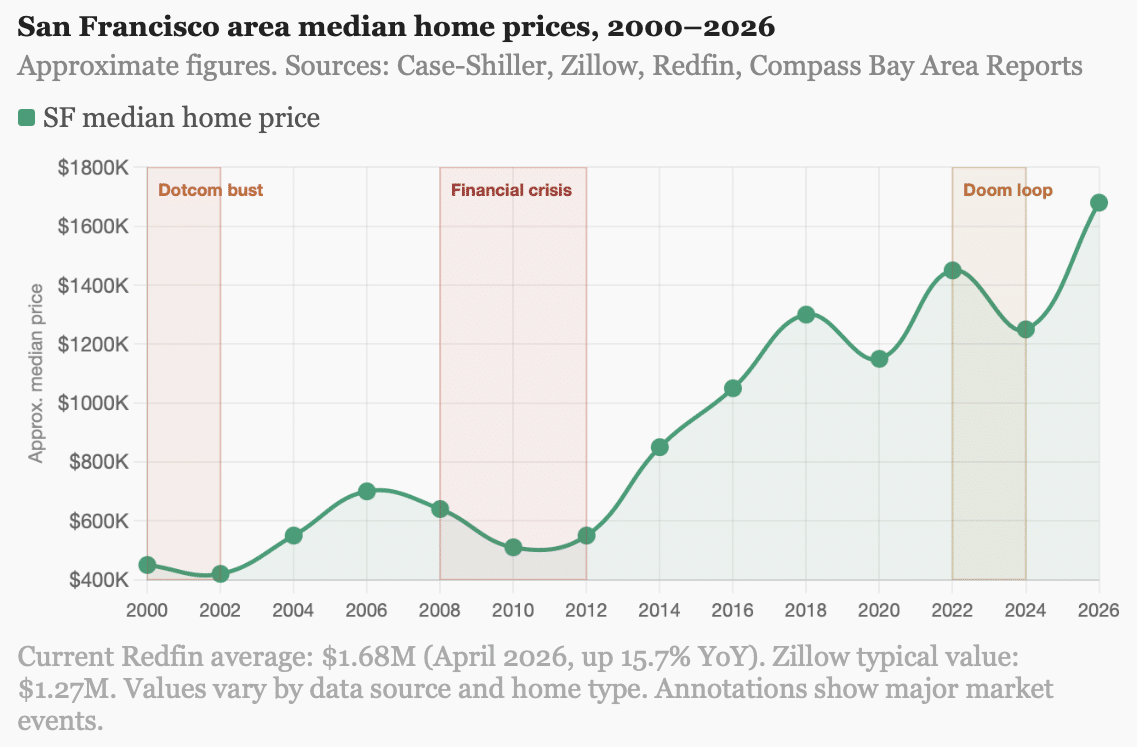
In hindsight, the opportunity window was obvious. But it still took courage to buy a multi-million dollar home that may eat your FIRE number when the media was telling you about doom 24/7.
Although prices always feel expensive today, the reality is, in the future, most real estate purchases today will likely look like bargains thanks to inflation and general population growth.
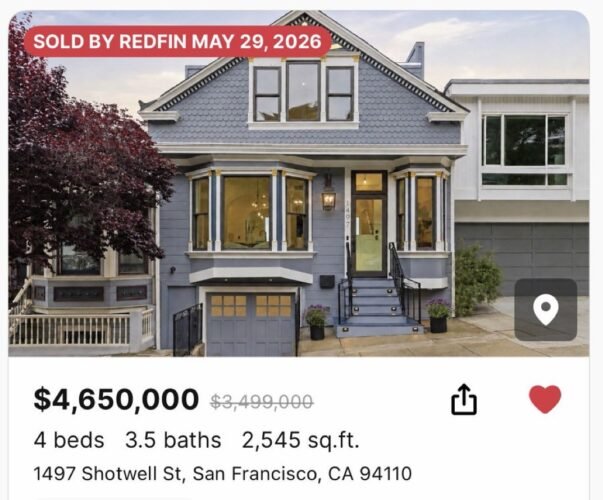
If you try to buy a single-family home priced in the frenzy zone (up to $3.5 million), you will likely face some serious competition. Here’s another example of a remodeled house in an alleyway that went way over asking.

Extremely Grateful For The Doom Loop Narrative
Since late 2023, the doom loop narrative has quietly evaporated.
Crime is measurably down, not just from peak, but in many categories below pre-pandemic levels.
We have a new mayor in Daniel Lurie who is independently wealthy enough that he’s not as beholden to the special interests and city contractor lobby that turned San Francisco’s public finances into something resembling organized crime with better parking.

The AI boom has only accelerated, with some of the largest names planning to IPO within the next 12 to 24 months. Meanwhile, mega funds keep emerging across the venture capital industry, driving further growth.
If I hadn’t invested in tech and private AI companies since 2023, I’m not sure I could afford my home today if it came to market at current prices. Bidding wars for the homes tech executives and AI workers want are something else right now.
I also think about all the people who remained in San Francisco during the pandemic. Because of their loyalty, they were rewarded with better raises and promotions. Entrepreneurs probably gained easier access to funding as relationships blossomed. They were also able to lock in favorable rents and buy more affordable homes before people started flocking back.
The doom loop is fully a boom loop. And many folks who stayed have made millions more as a result.
Embrace the Next Doom Narrative
The next time the world attacks your city – from the comfort of their couch in a state they’ve never left – embrace it. Notice the narrative. Check whether it matches reality on the ground. The wider the gap between perception and reality, the greater the opportunity.
Maybe it’s not a single-family home. Maybe it’s a rental property selling at a pandemic-era discount, or a stake in a downtown office building when everyone declares offices dead (again). Or maybe it’s just locking in an incredible long-term lease as renters flee the city. Even applying to better schools, more spots open up when families leave.
Look for local economic catalysts in micro-neighborhoods. AI campuses, transit investments, neighborhood anchors opening or returning, hospital expansions, and school remodels. Those tend to move prices before the national narrative catches up.
The people who fled San Francisco during COVID are now finding out the hard way what they missed. Their work relationships weakened from being out of sight. They can’t get back to rent-controlled apartments at their old prices. And they definitely can’t buy homes at doom loop prices. Leaving felt rational in the moment. Staying turned out to be the better long-term move.
I’m genuinely grateful for the San Francisco doom loop. The media and national politics handed this dual unemployed family a more comfortable future because opportunities got cheaper and we took advantage. Now that the boom loop narrative is in full swing, enabling us to remain free.
So to everyone reading: embrace the hate! Everything moves in cycles. Downturns don’t last forever, and neither do upturns. Enjoy the boom loop, stay humble, and keep one eye open for the next time the narrative breaks from reality. That’s when the real money is made.
Reader Questions
Any San Francisco residents stay through COVID and endure the non-stop hate and doom loop narrative from the media, acquaintances, and people who’d never set foot in the city? How did you deal with all the vitriol, and did you take advantage of the disconnect between perception and reality?
If you missed the doom loop buying window, what’s your plan now that prices are surging again? For those outside the Bay Area, has your city ever been through its own doom loop narrative, and did you take advantage or sit on the sidelines? And finally, how long do you think this boom loop will last?
New Doom Loop Investment Suggestion
There’s currently a mini-doom loop narrative going on with real estate in Sunbelt cities. However, with underbuilding since 2022, when interest rates started getting jacked up, there will be an undersupply of housing starting in late 2026 for several years. As a result, expect to see both rents and property prices start to rebound in places like Austin.
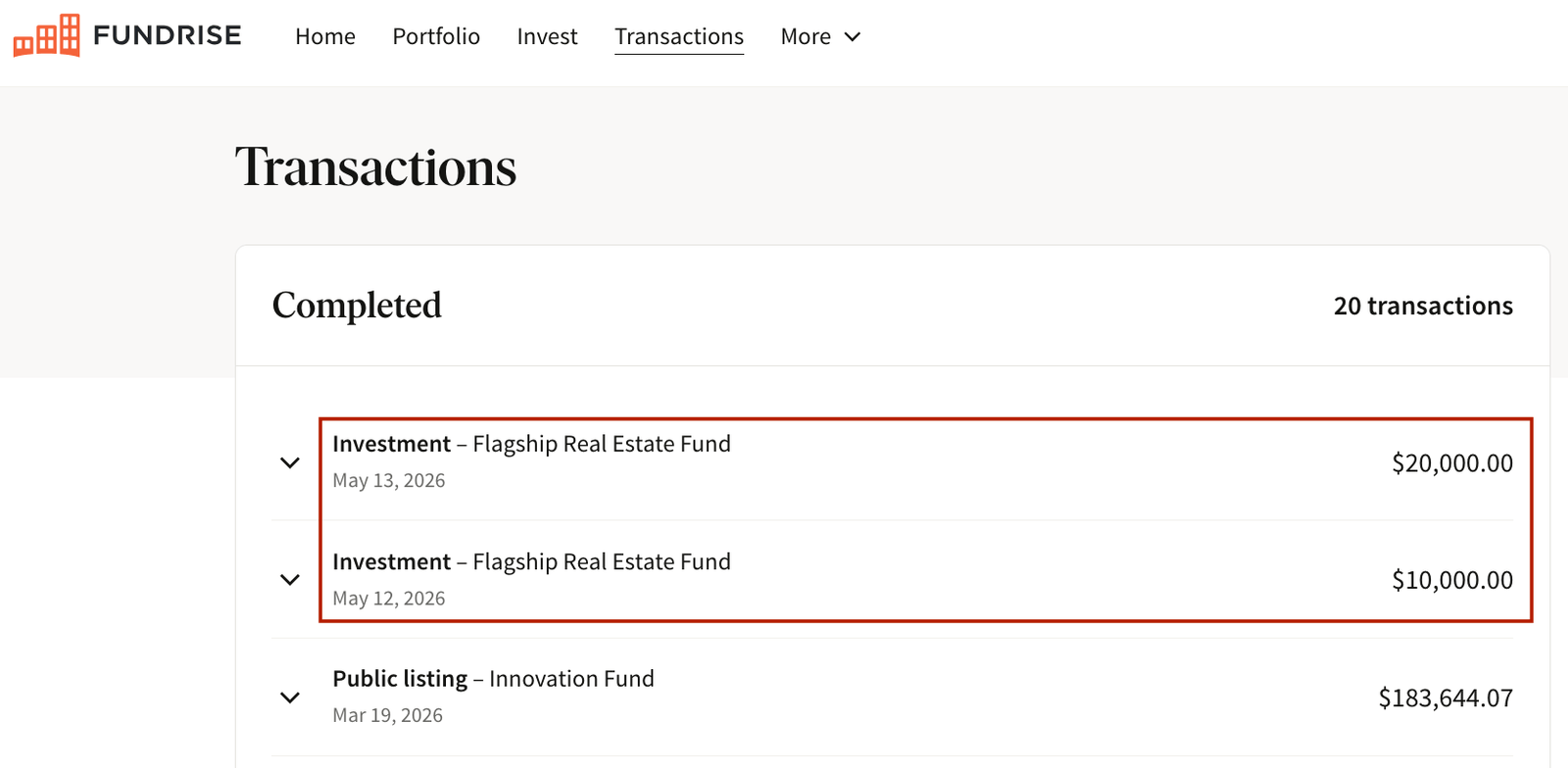
If you want to take advantage, check out Fundrise, my preferred private real estate platform that invests primarily in residential and industrial real estate in the Sunbelt. They are also investing more in data centers for the AI buildout and gained more capital to reinvest after a successful investment in VCX.

If you’re interested in achieving financial freedom sooner rather than later, join 60,000+ others and subscribe to my free weekly newsletter. You’ll stay on top of the most important financial news and pick up some contrarian takes that will make you think, and maybe even make you a fortune.
Read the full article here