






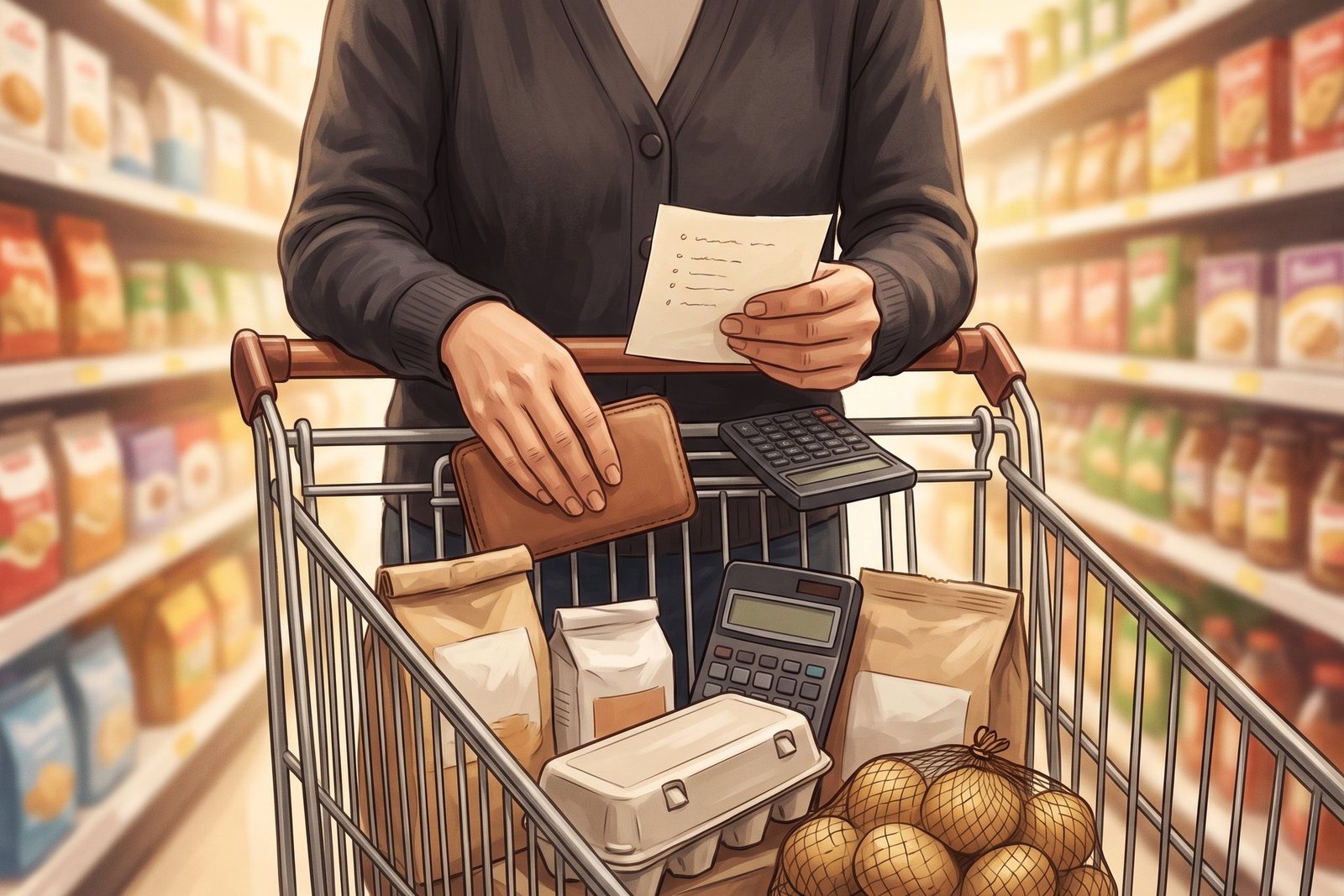


Grocery and other everyday costs have risen so much that some families are maxing out credit cards, borrowing money or using savings to buy basic food.
Alexandra Thompson and her husband both work full time, but the Union City, Tennessee, couple said they now buy only what they can afford each week with cash. They have canceled subscriptions and rarely eat out, yet still struggle to break even.
Americans surveyed in a new study by Omnisend, an e-commerce marketing platform company, described similar pressures. More consumers are borrowing to pay for groceries, and many said higher prices have changed how they view brands they once liked.
More People Are Borrowing to Pay for Groceries
In a survey of 1,075 consumers conducted in June, 30% said they had used a credit card to pay for essentials such as groceries, gas, utilities or medical bills in the previous three months, knowing they might not pay the bill in full. An additional 20% borrowed from friends or family, 18% used buy now, pay later products, and 17% used savings meant for something else.
Omnisend e-commerce expert Marty Bauer said households are increasingly using financial safety nets as part of their monthly routine. When people use credit and borrowing to cover essentials while feeling they are getting less for their money, he said, confidence in both their finances and the companies raising prices can fade.
Rising fuel costs, medical bills and car repairs can force families to choose between carrying balances and going without, Bauer told USA TODAY.
Another Study Shows Consumers Struggling
Nearly 1 in 5 adults paid for groceries with savings, and nearly 1 in 20 bought groceries with cash from a payday advance loan, according to the Urban Institute’s 2025 Well-Being and Basic Needs Survey, released in July.
Among adults ages 18 to 64, nearly 35% said they paid their credit card bill in full after using it for groceries. Another 19.6% paid less than the full balance but always made the minimum payment, while 8.7% did not always make the minimum payment. The Urban Institute said more than 1 in 4 working-age adults used credit cards to purchase food and experienced repayment challenges.
The share of respondents who did not always make a minimum payment rose to 8.7% from 7.1% in 2023, according to the study. Saloni Firasta Vastani, an Emory University associate professor who studies behavioral pricing, said the increase could signal deeper problems for lower-income households.
How Rising Prices Are Changing Shopping Habits
The Omnisend survey found that price pressures are affecting consumer trust as well as household budgets:
- Shrinkflation: 89% of respondents said they regularly notice when package sizes shrink while prices stay the same. Twenty-nine percent called that the most unfair type of price increase.
- Brand trust: 85% said they believe brands often use inflation to justify larger-than-necessary price increases. Sixty-seven percent said higher prices changed how they felt about brands, and 56% said they stopped buying those brands.
- Blame for rising prices: 45% said the government is more responsible than businesses for higher prices.
Some of the heaviest credit-card use for essentials was reported by people in higher income brackets: Nearly 35% of consumers earning more than $150,000 a year and about 40% of those earning $75,000 to $99,900 said they used credit cards for essentials.
This article is adapted from reporting by USA TODAY. Survey results reflect the studies cited in the report and may not represent all consumers.
Read the full article here