








Walmart has lowered the prices on thousands of summer items like beef and other favorites for a barbecue.
But were the rollbacks, which were first announced July 6 in a Truth Social post by President Donald Trump, at the request of the president’s administration to celebrate the country’s 250th anniversary? Were they part of an aggressive summer pricing campaign to stay competitive with other retailers?
Or are the effects of tariffs, which many retailers have cited as pressuring them to raise prices, starting to relax?
Walmart won’t say, declining any comment to USA TODAY beyond a press release the retailer issued on July 6.
What Did Trump Say About Walmart?
In his social media post, Trump said Walmart “will be lowering prices, by a lot, at my Administration’s request to celebrate our great Country’s 250th birthday.” He said Walmart would be “dropping the price of ground beef by almost 15%, among many other products.”
What Walmart Prices Are Going Down?
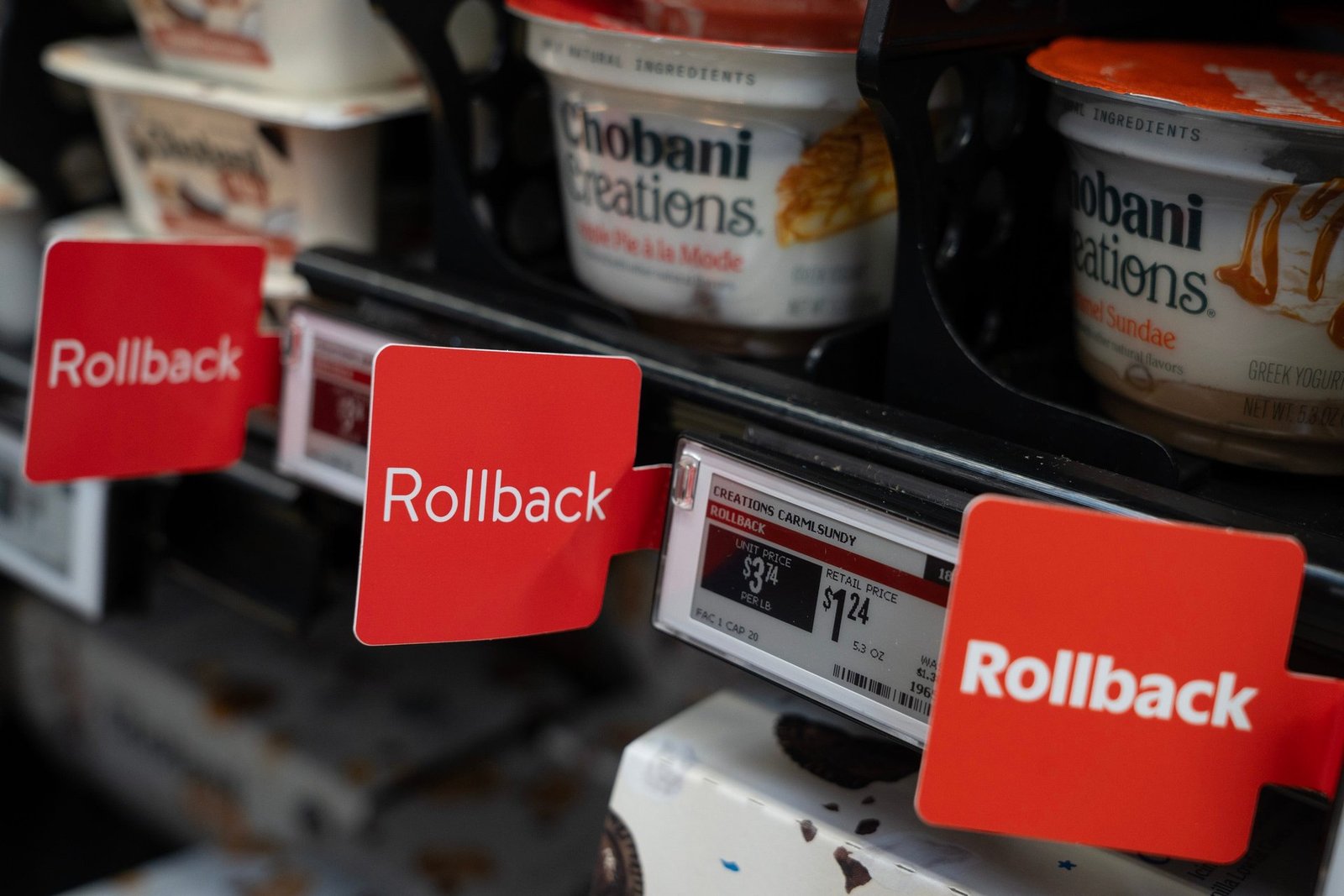
The price reductions were confirmed by Walmart in a news release on its website. The retailer said Walmart and Sam’s Club would be “helping customers and members save more with thousands of lower prices through Walmart’s signature Rollbacks and Sam’s Club offers across stores and clubs nationwide.”
According to the press release, Walmart dropped the price of one pound of 73% ground beef roll by 12% — from $6.74 to $5.94. At Sam’s Club, Member’s Mark 88/12 ground beef dropped by 3%, going from $6.17 to $5.97 per pound.
Other products receiving price drops included ice cream, disposable paper plates and soft drinks. At Sam’s Club, the retailer said 250 items had price drops.
“This summer, we’re making even more investments in price, with thousands of Rollbacks across the products customers are shopping for most including beef, fresh produce and beverages, grills, pools, toys and summer fashion apparel,” said Julie Barber, executive vice president and chief merchant for Walmart U.S. in the press release. “We’re helping everyone save more for every occasion.”
Walmart declined to comment on the price reductions or on Trump’s social media post and directed USA TODAY to the press release.
Price Reductions Likely Part of Pricing Promotion, Professor Says
The Walmart price reductions “looks less like a turning point on food inflation and more like an aggressive summer promotion,” David Ortega, a food economist and professor at Michigan State University, told USA TODAY. “Big retailers spotlight ‘backyard barbecue’ staples like meat, corn, soda, chips because they’re highly visible and shape how shoppers feel about prices in general.”
“But a double-digit cut on a handful of items doesn’t mean the cost of a full grocery trip is back to where it was a few years ago,” Ortega explained.
Labor, transportation, energy, packaging and rent have increased over the past year and since the COVID-19 pandemic, he said.
Ortega said “Walmart can absorb some margin or use its scale to push down costs on specific products, but that’s different from a broad reset of the price level.” Shoppers may be paying less for burger fixings, Ortega said, “but their shopping cart is still shaped by the cumulative increases of the last few years.”
In particular, Ortega said, beef prices are at record highs and getting a lot of attention, but “it’s fundamentally a supply story compounded by strong demand: U.S. cattle herds have contracted to their lowest levels in decades after years of drought drove up feed costs and pushed ranches to cull, while consumer appetite for beef has held up.”
Tariffs have also added pressure on retailers’ margins through duties on imported lean beef and trimmings that processors blend into ground beef, which then nudge up prices, Ortega said. But that is a secondary factor to herd dynamics, he said.
Weren’t Retailers Saying Tariffs Were the Cause of Prices to Increase?
Tariffs have been a cornerstone of Trump’s economic policy, and despite losses in court, the administration remains determined to impose them.
Companies have three options when tariffs, which are a tax on imports, are imposed: absorb it in their margins, adjust their supply chains or pass it on to shoppers through higher prices, Ortega said.
The Supreme Court in February struck down Trump’s tariffs that were imposed last year. Trump responded with a 10% increase in temporary tariffs, which took effect in February and expire after 150 days if Congress does not extend them — which means some action needs to happen by the end of July.
If the temporary tariffs expire, the Trump administration can use another part of U.S. trade law referred to as “section 301” that lets the government investigate whether other countries are trading unfairly, through subsidies, barriers to U.S. exports or labor abuses, and allows them to respond with measures like tariffs, explained Ortega.
“Consumers should care because those charges don’t vanish… they show up as higher costs for importers, which can mean higher retail prices, fewer choices, or lower discounts,” he said.
Drew DeLong, head of corporate statecraft in Kearney Foresight, an arm of global management consultancy Kearney, said he expects “tariffs to be here for quite some time.” A clearer read on where prices settle for shoppers will happen sometime in late July or early August, he said.
DeLong said he believes tariffs will also play a role for “whoever enters the Oval Office in January 2029” and that the president “will have to take inventory of the full economic toolkit and the state of the market… absent severe shifts in conditions, the theme that economic security is national security will keep trade policy on the path it is on,” he said.
In other words, tariff inflation is not suddenly unwinding, said Ortega.
Greg Portell, lead partner of global markets at Kearney, agrees.
“It would be a mistake to characterize rising prices resulting from tariffs as reversing,” Portell told USA TODAY.
The initial tariffs caught many retailers by surprise, Portell said, but they found ways to mitigate the cost increases. Some of those changes included making product packaging smaller and changes to the product.
However, “for a company like Walmart that has built their brand on cost efficiency, the push to lower prices is an ongoing objective regardless of specific tariff policies. Consumers are now seeing the benefit of that commitment,” said Portell.
Additionally, many of the products that Walmart lowered prices on benefit from domestic supply chains and are less directly impacted by tariffs, he said.
Did Trump Politicize Walmart’s Price Reductions?
Ortega said it was notable that the Walmart press release “didn’t credit the administration. The President, meanwhile, is linking that private-sector decision to its broader messaging on inflation. The promotions are real, but they don’t signal that the structural drivers of food prices are being permanently dialed back.”
Businesses should always be mindful of the political contexts in which they operate, Portell said.
Portell said it would be “naïve to overlook the relationship between consumer businesses and politicians.” But retailers also typically maintain a core commitment to their brands and low pricing is a core brand promise for Walmart, he said.
“It isn’t unusual for them to highlight prices reductions regardless of who is in political office. Conversely, politicians have learned repeatedly that the economy is a primary voter concern. In that sense, it isn’t unusual to see incumbents celebrating price reductions,” Portell said.
Will Other Retailers Lower Their Prices in Response?
Whether or not they shop at Walmart, shoppers will likely benefit from the Walmart price reductions since Ortega said he expects some response from other retailers on “easy-to-compare items.”
“If Walmart advertises cheaper ground beef or soda, competitors won’t want to look high on those same products,” he said. “But these moves tend to be selective.”
Ultimately though, shoppers don’t feel inflation through only sticker prices, but how often and how deeply items go on sale, Ortega said.
“Highly publicized cuts on a few staples can lift sentiment, while less prominent categories like spices, snacks, and prepared foods keep drifting up,” he said. “And the ongoing back-and-forth between courts and policymakers creates real uncertainty about future trade costs, which itself makes companies less likely to slash prices aggressively today.”
Betty Lin-Fisher is a consumer reporter for USA TODAY. Reach her at [email protected] or follow her on X, Facebook or Instagram @blinfisher and @blinfisher.bsky.social on Bluesky. Sign up for our free The Daily Money newsletter, which breaks down complex consumer and financial news. Subscribe here.
Reporting by Betty Lin-Fisher, USA TODAY / USA TODAY
USA TODAY Network via Reuters Connect
Read the full article here