






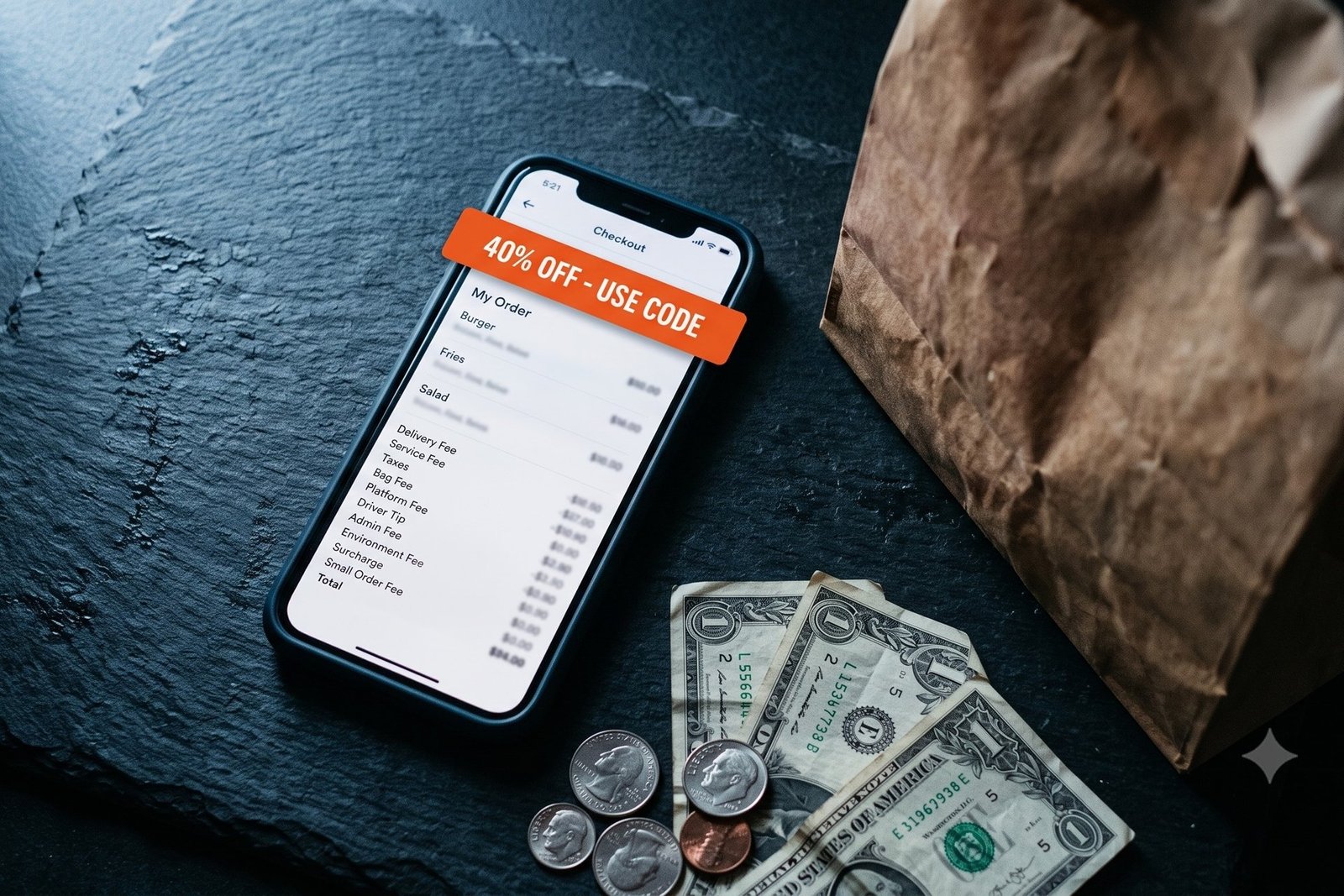


You open the food delivery app hungry. A banner ad promises 40% off. Then you build your order, hit checkout — and that discount has melted into a stack of fees, markups and a total that’s higher than if you’d just called the restaurant yourself.
Sound familiar? You’re not imagining it.
And you’re not the only one who noticed. In May 2026, 16 state attorneys general sent the Federal Trade Commission a letter laying out exactly how food delivery platforms engineer confusion to separate you from your money.
Their verdict, in plain English: These apps have turned your dinner order into a shell game.
Here are the seven tricks they flagged — and how to beat each one.
1. The fees they hide until the very end
You can’t see the full price until you’ve picked your food and reached checkout. Only then do the service fee, delivery fee and the rest appear. The attorneys general call this exactly what it is: a bait and switch.
Regulators have already pounced. Back in 2022, the D.C. attorney general squeezed $3.5 million out of Grubhub over hidden fees and deceptive marketing.
Money Talks News has tracked these delivery app price tricks for years. The defense is simple: Before you commit, scroll to the final total — not the menu price. Better yet, order pickup or call the restaurant directly. It’s the single move that dodges almost every trick on this list.
2. The small order fee that punishes you for buying too little
Order a single burrito and some apps tack on a small order fee. How’s it calculated? They usually won’t say. The AGs point out you often can’t tell how much more you’d need to spend to make it vanish.
That’s the whole point. The fee exists to nudge you into adding fries you didn’t want.
Don’t take the bait. If that fee pops up, treat it as your cue to order direct or grab the food yourself.
3. The regulatory response fee that makes you cover their labor costs
When cities pass laws guaranteeing delivery workers a minimum wage, some platforms respond by inventing a brand-new fee — and passing the cost straight to you. Instacart hit New York City customers with one in early 2026.
It’s dressed up to sound official. It isn’t a tax. It’s a surcharge with a fancy name.
These invented charges aren’t unique to delivery, either — sneaky surcharges are draining wallets across nearly every bill you pay. Ordering pickup usually skips this one entirely.
4. The menu markup you never see
The price of that pad thai is often higher on the app than inside the restaurant. Why? Platforms charge restaurants a commission — 15% to 30% of the order, by DoorDash’s own published rates. Many restaurants pad their app menus to cover it.
One 2022 industry index pegged the average delivery-app markup at roughly 24% over ordering direct.
Pull up the restaurant’s own website before you order. Compare its menu prices to the app’s. That gap will often talk you straight into pickup.
Quick gut-check — if your money advice is coming from random online influencers, you’re playing a dangerous game. I’ve been a CPA since 1981 and writing about money since before the internet existed. Sign up for the free Money Talks Newsletter and get expert advice that’s been tested by time.
5. Dynamic pricing that changes while you watch
Ever notice the delivery fee jumps at dinnertime? That’s dynamic pricing — the same surge model that gouges you on a Friday-night ride, now aimed at your burrito. Prices shift in real time based on demand.
The dinner-rush number isn’t carved in stone. Order a little earlier or later, and the fee often drops on its own.
6. Surveillance pricing that uses your own data against you
This one should make you angry. Platforms can use your location, your order history, even the fact that it’s payday to decide what price you see. The FTC’s 2025 study found companies draw on a startling range of personal data to set individual prices.
As the attorneys general warned, shoppers “cannot meaningfully avoid personalized pricing that they don’t know about.”
It’s the same playbook retailers use to manipulate shoppers online. Log out between orders. Break up your routine. And be suspicious of ordering the second your paycheck lands.
7. The vanishing discount — that 40% off isn’t a gift
Here’s the sneakiest one. To keep you from noticing personalized pricing, the AGs say some companies bury it inside personalized discounts and promotions. That giant percentage off isn’t generosity. It’s a number calibrated to you, built to pull more money out of your pocket — not less.
So the 40% off feels fantastic, right up until the total lands higher than the restaurant’s own price.
Ignore the percentage. It’s theater. Look only at the final out-the-door total, then hold it up against ordering direct. A discount means nothing if the bottom line is bigger.
The one move that beats all seven
Notice the pattern? Every trick leans on one thing: you not being able to compare prices. Stack hidden fees on secret markups on a discount built just for you, and comparison shopping becomes nearly impossible. That’s not sloppiness. That’s the design.
The attorneys general want the FTC to force these apps to show the real total, explain every fee, and admit when they’re pricing you personally. Good. But rules like that take years.
Until then, the fix is refreshingly low-tech. Order pickup. Or call the restaurant and order direct. You’ll skip the fees, dodge the markup, and starve the algorithm of the data it uses to price you. If you order takeout often, it’s worth knowing the other mistakes quietly padding your bill.
The app wants you to believe it’s saving you money. Most nights, it’s doing the opposite. Blame the rigged design, not your own hunger — then order around it.
Read the full article here