






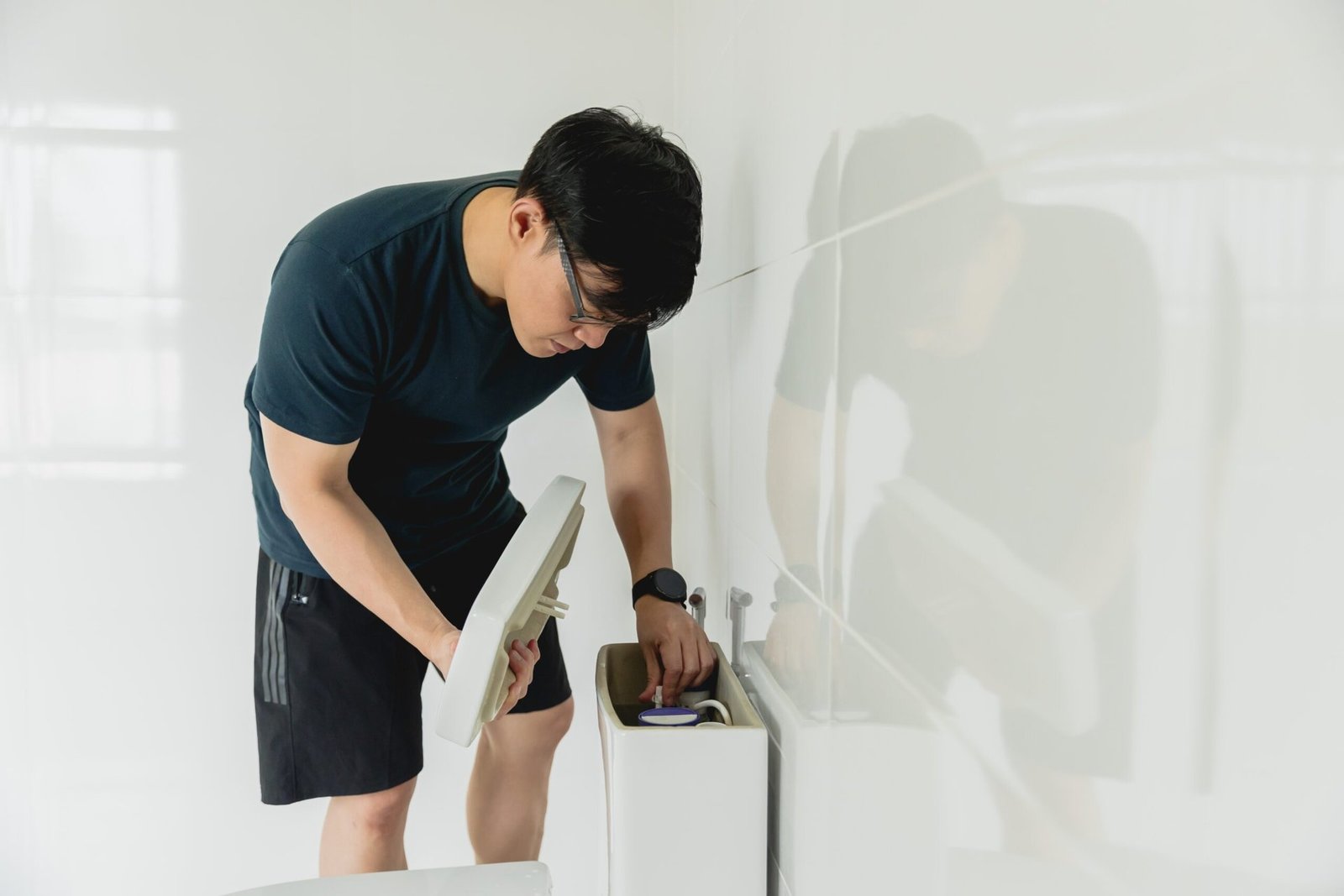


Listen to your bathroom for a second. Hear a faint hiss or the toilet suddenly flushing itself when nobody touched it? That’s not a ghost. That’s money — running straight down the drain, all day, every day.
A running toilet is one of the most common problems in any home, and one of the easiest to fix yourself. You don’t need a plumber. You need about 10 bucks in parts and 15 minutes.
Here’s what’s at stake. The EPA says a worn-out flapper can silently leak thousands of gallons a year, and the average home’s leaks waste more than 9,300 gallons annually — enough to pad your water bill by around 10%.
A plumber will happily charge $100 to $150 to fix it. But this is one of the simplest repairs handymen hope you never learn to do. Let’s do it yourself instead.
1. First, make sure it’s actually leaking
Some leaks are silent. Here’s a dead-simple test: Take the lid off the tank and drop in a few drops of food coloring. Wait 10 to 15 minutes and don’t flush.
If colored water shows up in the bowl, you’ve got a leak — and it’s almost certainly the flapper. If it doesn’t, your problem is water overflowing inside the tank. Both are easy to deal with.
2. Meet the three parts that cause most of the trouble
Lift off the tank lid and look inside. Three things do all the work in there:
- The flapper — the rubber seal at the bottom that lifts to flush, then drops to reseal.
- The float — the ball or cup that rides on the water and tells the tank when to stop filling.
- The fill valve — the tall tower that refills the tank after each flush.
Nearly every running toilet comes down to one of these three. We’ll take them in order.
3. Replace the flapper — the usual suspect
If the dye test pointed here, this is your fix, and it’s the most common one. Over time, that rubber flapper gets stiff or warped and stops sealing.
- Turn off the water at the shutoff valve behind the toilet, then flush to empty the tank.
- Unhook the old flapper from the chain and the pegs at its base.
- Take it to the hardware store to match it — flappers cost just a few dollars.
- Snap the new one on, reconnect the chain, turn the water back on, and test.
Quick gut-check — if your money advice is coming from random online influencers, you’re playing a dangerous game. I’ve been a CPA since 1981 and writing about money since before the internet existed. Sign up for the free Money Talks Newsletter and get expert advice that’s been tested by time.
4. Lower the water level
If your dye test came back clean but the toilet keeps running, water is probably spilling into the overflow tube — that open pipe standing in the middle of the tank.
- Find the float. On newer toilets it’s a cup on the fill valve; on older ones, it’s a ball on a metal arm.
- Adjust it down — usually a screw or a clip — so the tank stops filling about an inch below the top of the overflow tube.
- Flush and watch. The water should settle below that line and shut off.
5. Check the chain and handle
Sometimes the fix is almost embarrassingly simple. A chain that’s too long gets pinned under the flapper and holds it open. Too short, and the flapper never fully closes.
- Give the chain just a little slack — enough to close fully, not so much that it tangles.
- If the handle sticks, unscrew the nut inside the tank and clean or tighten it.
6. Still running? Swap the fill valve
If you’ve tried everything above and it still won’t quit, the fill valve itself is worn out. A new one runs about $15 to $20 and comes with instructions.
- Shut off the water, flush, and sponge out the last of the tank.
- Unscrew the old valve from under the tank and lift it out.
- Drop in the new one, reconnect the water line, and set the height per the package instructions.
If that sounds like more than you want to take on, at this point it’s fair to call a plumber. Even then, you’ve already ruled out the cheap fixes yourself.
That’s it. For most running toilets, a $5 flapper and 15 minutes is the whole story — and you shut off one of the sneakiest ways to run up your water bill.
Best part? You’ll never hear that quiet little hiss the same way again. Now you’ll know it for what it is — free money you’re about to keep.
Read the full article here