




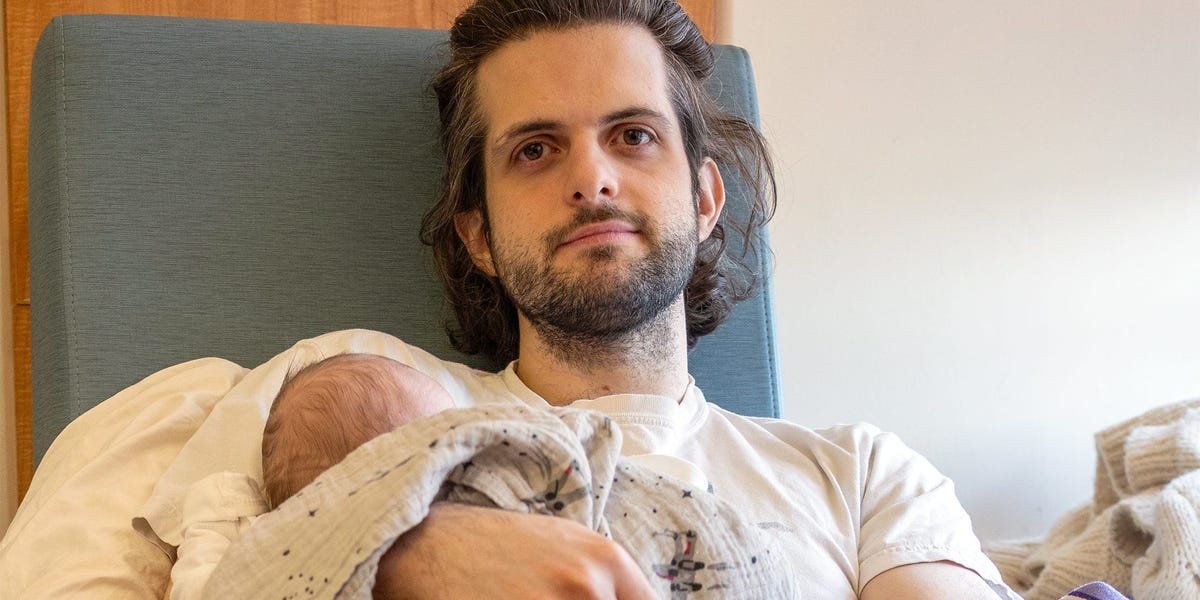


For six glorious weeks before our son arrived, I relished the delicious pleasure of total freedom.
My wife Liv’s maternity leave had begun. Our living room speakers pumped out the groovy soundtrack of her favorite deckbuilding video game, Balatro.
I remember the late-winter chill nipping at my cheeks as I biked home from a twilight music photography gig. I cherished falling asleep next to Liv at 2 a.m. and waking up for lunchtime. I remember kissing her very pregnant belly, strong kicks tickling my lips.
Then, suddenly, it was time to slow down. Our son’s due date sneaked up on us; labor could begin at any time. My mind was cloudy with vague, shapeless apprehension.
My world darkened in a hospital room
We were as prepared as we could have been. Liv and I read books, watched videos, and attended classes. Our tiny nursery corner was stocked and ready. We drove to the hospital for our scheduled induction, Manhattan mostly asleep in the early dawn.
Then, in a hospital room at 3 am, our careful birthing plan seemed to shatter. Pitocin, the synthetic hormone used to induce labor, pumped through Liv’s bloodstream, denying her the soothing effects of natural oxytocin. Her epidural, the anesthesia delivered inside her spinal canal through a plastic tube, partially failed. She could feel everything, and all I could do was squeeze her hand. My wife, the strongest human I know, screamed in pain I will never understand as our son entered the world.
Over the next few days, a hopeless, joyless shadow crawled through my soul. All of this effort, sacrifice, and pain was for a fleshy alien who barely looked like me, redirected every second of my free time, physically hurt my wife, stole her attention away from me, and kept me awake.
I quickly lost myself because I had no more time for the hobbies that make me who I am.
And for what reward? He couldn’t love me. When he started to smile, I couldn’t believe it was anything more than involuntary muscle contractions.
The power of empathy
My physician listened to my symptoms and named the disorder: postpartum depression.
An SSRI antidepressant had worked to pull me out of a previous pit, so my doctor prescribed me Lexapro. The second half of my treatment plan included a promise that I would share the true depth of my feelings with other people. Without my doctor validating my words, I may not have recovered from PPD as quickly as I did.
I also had a wonderful, compassionate partner and mother-in-law who, in addition to undergoing their own intense transformations, had an overflowing capacity to support me.
When our son was five weeks old, I spent five quiet days alone in New York City, visiting the movie theater and biking across the George Washington Bridge. This healing taste of my previous life gave me the momentum to be a better father and husband.
Sharing my authentic story
As my doctor encouraged, I shared my story with fathers-to-be at a weekly dad class. I spoke with vulnerability and honored my lived experiences. While every parenting journey is unique, we share a surprising number of common thoughts, feelings, and questions that deserve to be discussed but often aren’t.
Individual and couples therapy also yielded valuable coping tools for navigating the rough, novel transitions of parenthood. These were safe spaces to voice my deepest, scariest thoughts to a third party invested in our growth.
As our son grew, milestone after incredible milestone, it became increasingly easier to be honest with others about my trials as a parent. I learned that almost everyone is willing to talk about their challenges related to sleep, coparenting, self-worth, burnout, or tantrums. These conversations comprise the crux of healing.
Strength for every season
We recently celebrated our son’s second birthday. In the past few weeks, he’s experienced yet another massive physical and mental growth spurt, accompanied by significant behavioral changes.
For example, his afternoon nap is no longer guaranteed. As a stay-at-home dad, this extends the number of hours I work from 10 to 12, including two extra hours spent with a tired toddler stumbling around the living room.
I don’t know what’s next, but I know this exhausting season won’t last. That’s the difference between my mindset two years ago and today: This time, I have hope for the future. It’s a future full of love, irreplaceable moments, and sudden shifts that change what it means to be alive.
Read the full article here