





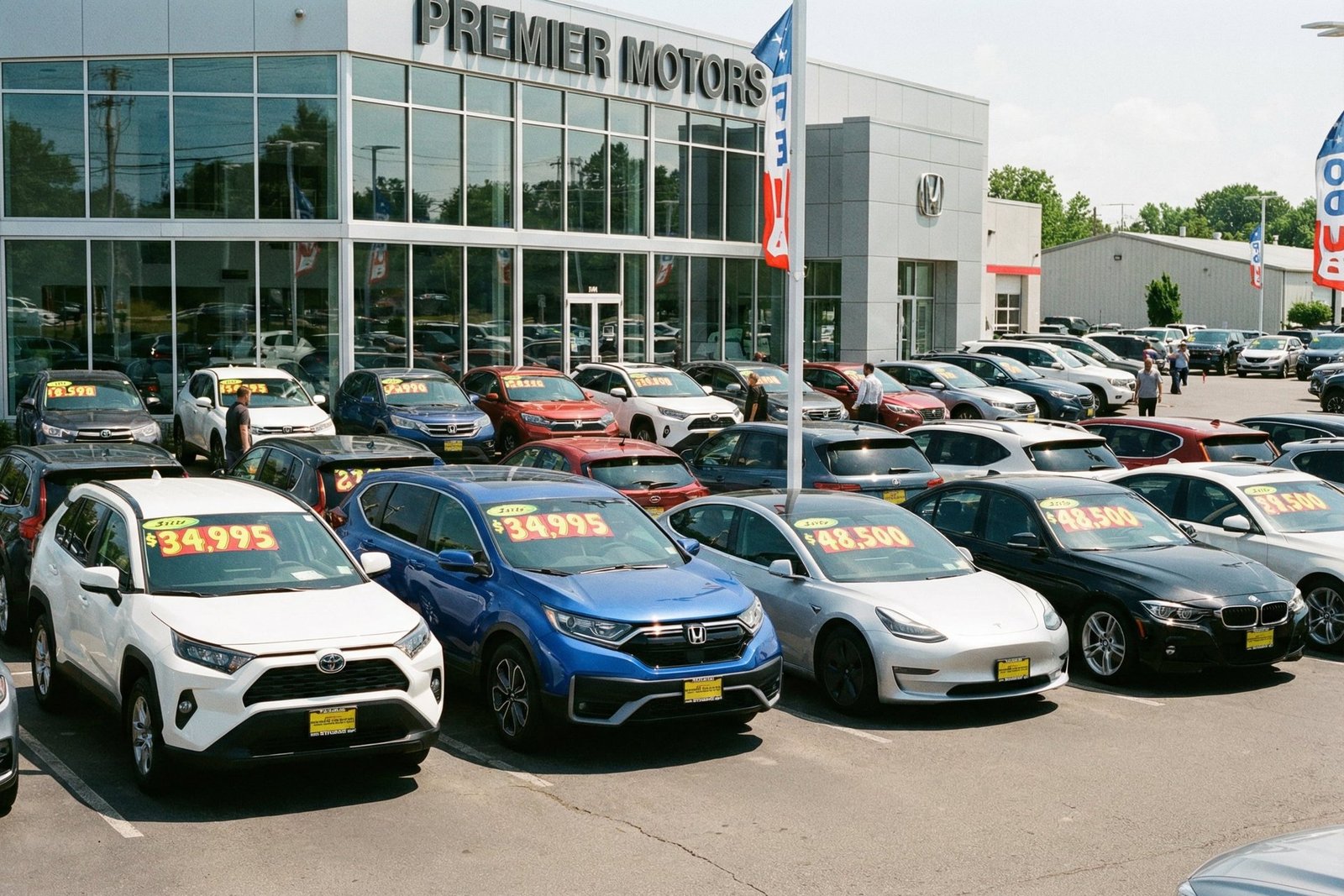


The outlook for U.S. new car sales volume this year is uncertain amid economic volatility, but one thing consumers can expect is that vehicle prices will rise as carmakers look to offset the costs of tariffs that they no longer can absorb, as they did last year.
According to Cox Automotive, the total burden of President Donald Trump’s 25% tariffs on imported cars and auto parts and 50% tariffs on steel and aluminum, cost automakers and suppliers an estimated $35 billion last year.
“(Automakers) absorbed those tariff costs at launch to defend volume and protect market share, but that was never sustainable,” Erin Keating, Cox Automotive executive analyst, said on March 25. “All the while, we saw destination and handling fees rise as automakers looked for ways to recoup some costs. The net takeaway: Vehicle prices are going up. The question is how much and how fast?”
That’s just one conclusion drawn from the analysts at Cox Automotive, which held its first-quarter insights call with the news media and industry experts on March 25.
The automotive research firm said first-quarter data studied so far showed that U.S. retail car sales will likely be down 2.6% to 15.8 million this year compared with 2025, given many factors in the economy creating buyer hesitancy this year.
Some key insights Cox analysts listed so far this year are:
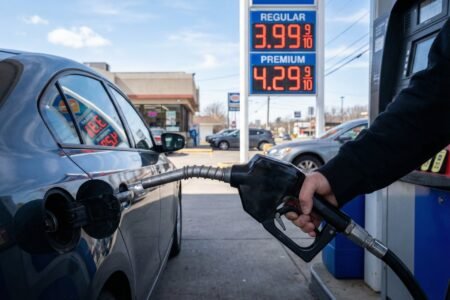
- Hybrid powertrains are the most sought after by consumers at the moment due to a 32% rise in gasoline prices compared with the year-ago quarter because of the war in Iran.
- Interest in electric vehicles is also increasing, but if the Middle East conflict is resolved, that interest could drop.
- The price gap between gasoline vehicles and EVs is reaching parity at a record low of EVs costing about $6,000 more than gasoline powertrains.
- “Mid is in,” meaning vehicles priced in the mid range are top sellers, indicating even affluent shoppers seek value, putting Detroit Three automakers at a disadvantage given the product lineup leans higher-priced.
- For the first quarter, Cox expects General Motors will have sold the most new cars in the United States, but it will not be the true winner because its sales will be lower than a year ago. Toyota will be the winner with market share gains.
Cox analysts note that March has been the month “of madness” given that the Middle East conflict, which began in early March and offers no clear end in sight, has consumers hesitating to spend any tax refund dollars on big purchases such as cars.
Also, there has been very little progress on inflation easing. Gasoline prices are rising fast, employment is softening and new car loan rates have inched up 9.8% as of February, about a 10th of a point higher than this time last year.
“We are sitting at a unique inflection point where overlapping policy actions, cost pressures, geopolitical uncertainty, and rapidly shifting consumer behavior are all colliding at once,” said Keating. “The pace of change in the past 12 months has been extraordinary, and it’s created a market environment that is genuinely difficult to navigate for automakers, for dealers and for consumers.”
‘Absorption Phase’ Is Over
The tariffs Trump put on the auto industry are firm, though there have been some “bilateral deals” to lower rates for most trading partners, Keating said. Still, the industry is looking for a renegotiation of the United States Mexico Canada Agreement this year to offer more stable relief of tariffs.
“If that doesn’t materialize, rules-of-origin enforcement could fundamentally reshape North American sourcing,” Keating said.
Last year, as the Detroit Free Press reported, tariffs prompted many automakers to raise the destination fees on new car prices to recoup some costs. That’s expected to continue this year. The destination fee is a nonnegotiable fee set by the car company to cover the manufacturer’s cost to transport the vehicle from the factory to the dealership.
But the automakers’ ability to absorb the rest of the tariff expenses is in the past, Keating said.
“Looking ahead, the absorption phase is definitely over,” Keating said. (Automakers) “are now in pass-through mode. We’re seeing this visible in manufacturers suggested retail price increases on model year changeover. We’re seeing (automakers) rationalize features and push lower cost trims to balance affordability against a higher cost base. And incentive strategy is under real tension.”
On the positive side, Keating said more manufacturers are announcing U.S.-assembled vehicles for export, which creates a negotiating lever for potential export credits. Trump’s shift away from punitive emissions requirements could also help U.S. automakers.
Middle East Conflict and the Consumer
Tariffs aren’t the only force pressuring the auto industry. The conflict in the Middle East is driving up gasoline prices, hurting all consumers — especially the lower income group.
“This isn’t a new dynamic, but what makes the current environment different is that consumers are facing a compound squeeze and getting hit from all directions simultaneously,” Keating said. “We can see real in-market shopping behaviors changing. Hybrid and plug-in hybrid shopping has been relatively consistent. There’s durable interest there. Pure EV shopping interest has climbed to its highest point so far in 2026, which is a meaningful signal, as it does show that consumers are reengaging with the EV category.”
But that trend has happened before, so while it shows renewed curiosity in EVs, Keating warned, “we should be watching whether this momentum sustains or whether it’s another short-lived spike.”
She said as all prices rise — gasoline, car insurance, new vehicle prices — consumers will look to make budget adjustments that could impact vehicle sales. These are trade-offs consumers make to preserve their ability to pay their monthly car loan.
“Whether that is that they’re driving less, returning to work-from-home arrangements where possible, or even cutting discretionary spending in other categories,” Keating said. “For those automotive shoppers, we see more openness to hybrids and EVs than a year ago, but long-term behavior still depends on overcoming known barriers, which are charging infrastructure, range anxiety, upfront costs … as well as, critically, how long the conflict persists.”
There is good news. Unlike most consumer goods, including cars, where once prices go up and rarely come back down, there is one “genie that often goes back in the bottle” and that is gas prices.
“If tensions de-escalate tomorrow and gas stabilizes at $2.80, the urgency to switch powertrains fades quickly,” Keating said. “This isn’t a permanent shift in consumer preference yet. It’s a conditional response to conditions that may or may not persist.”
So the industry’s ability to have pricing discipline, bring a good mix of inventory to market to meet consumers’ interest in powertrains and affordability will all determine who comes out in a position of strength.
New Car Sales Ahead
Charlie Chesbrough, senior economist at Cox Automotive, said for now the company is leaving its 2026 forecast of 15.8 million U.S. car sales unchanged, with a warning attached.
“The current Middle East conflict adds a tremendous amount of uncertainty to the vehicle market,” Chesbrough said. “We assume the war and the resulting oil price volatility will only last a few months. A prolonged conflict could create a much more negative outcome. We aren’t there yet.”
Chesbrough shared Cox’s first-quarter sales estimates for automakers, which don’t report sales for a week yet. But preliminary estimates show that GM will finish the quarter selling about 624,000 new cars, the most of all automakers, but “a hollow victory” nonetheless, he said.
“Their sales are expected to be down nearly 10% from the first quarter last year. More than the national averages … and their market share will start the year six-tenths of a percent lower, thanks to relatively weak sales from Cadillac and Buick brands so far in 2026,” Chesbrough said.
Second place by volume, “but arguably the true winner,” is Toyota selling 569,917 vehicles, nearly flat against the year-ago period, he said. But they start the year with 1% gain in market share due to strong sales of the Tacoma pickup and Forerunner SUV. Ford will be in third place in terms of sales volume with the expectation it will have sold 452,035 vehicles in the quarter, but it will be a 9.3% decline compared with sales in the year-ago period.
“Hyundai is another manufacturer enjoying a relatively strong first quarter,” Chesbrough said. “Stellantis has also seen some good early signs. Their first quarter sales were (285,636) down just 1.9%, much less than the national average. Strong sales from Ram pickup and ProMaster van is helping, and the return of Jeep Cherokee should lift sales through the year.”
The car buyers are letting the industry know what’s winning, he said. Sales of the most affordable segments such as compact SUVs and cars priced less than $40,000, are down this year compared with the first two months last year. Chesbrough pointed to high interest rates and high prices as impacting affordability for traditional customers in those segments.
But even in the more expensive segments such as the trucks and SUVs priced north of $70,000, those sales also are down this year.
“What is winning in this market? Midsize cars, midsize trucks, midsize SUVs, are all seeing gains,” Chesbrough said. “Mid is in. And so is luxury compact SUVs — the more affordable premium segment.”
It’s still early in the year, but consumers may be shifting toward value in the marketplace as economic uncertainty and affordability concerns rule the day.
“The more affluent segments (might) lose their customers to the more practical, and causing customers of the most affordable segments to pull back from buying new entirely,” Chesbrough said.
Jamie L. LaReau is the senior autos writer for USA TODAY Co. who covers Ford Motor Co. for the Detroit Free Press. Contact Jamie at [email protected]. Follow her on Twitter @jlareauan. To sign up for our autos newsletter. Become a subscriber.
This article originally appeared on Detroit Free Press: Tariffs push new car prices higher, and experts say it won’t stop
Reporting by Jamie L. LaReau, Detroit Free Press / Detroit Free Press
USA TODAY Network via Reuters Connect
Read the full article here