







It’s been a tough time for distilled spirits.
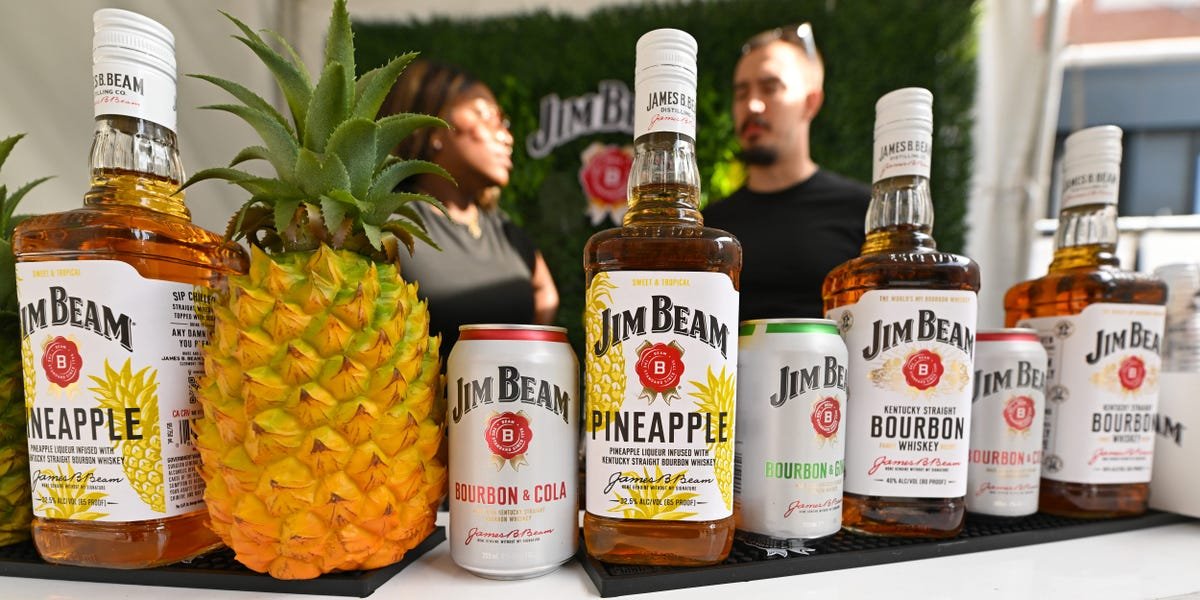
Jim Beam, a brand nearly 230 years old, confirmed to Business Insider on Monday that it will halt bourbon production in its flagship distillery located in Clermont, Kentucky, for a year.
“We are always assessing production levels to best meet consumer demand and recently met with our team to discuss our volumes for 2026,” a spokesperson of Suntory Global Spirits, parent company of Jim Beam, told Business Insider in a statement.
The spokesperson did not address whether the change is due to tariffs or counter-tariffs. The company said a separate distillery in Boston, Kentucky, will continue to operate and that the company is in communication with the union.
According to the Jim Beam website, a few fan favorites are produced at the Clermont distillery, including the Knob Creek and the Old Overholt Rye Whiskey.
A tough time for the industry
The suspension of distilling at the historic site comes at a tough time for the distilled spirits industry, due to declining demand both overseas and in the US.
Between 2003 and 2023, American whiskey sales in the US alone reached 31 million nine-liter cases, up about 132 % since 2003, according to the Distilled Spirits Council of the United States.
Starting from 2024, sales began to slip. DISCUS attributed the 1.1% decline to high prices and consumer strain in a February press release, and headwinds only grew stronger in 2025.
Brown-Forman, which owns Jack Daniel’s, another top American whiskey brand, said in a December report that in the six months leading up to the end of October, net sales in Canada declined 62%, driven by “volumetric declines” in the company’s American whiskey portfolio.
According to DISCUS, the EU, Canada, the UK, and Japan accounted for 70% of spirits exports in 2024, but all of these markets have performed poorly in 2025. Overall, in Q2, exports were down 9%.
Aside from an off-the-cliff decline in Canada, which halted imports of US booze amid trade tensions with the Trump administration in March, the Council’s mid-year report shows that spirits exports to the UK and Japan also declined by more than 23%, while exports to the EU were down 12%. The trend contributed to double-digit losses in exports across categories, including brandy, American Whiskey, vodka, and cordials.
The Council did not publish figures on how much the industry relies on exports, but said in its mid-year report that the international market “is especially critical for American Whiskey producers, who are facing stagnating domestic sales and record-high inventory levels.”
“There’s a growing concern that our international consumers are increasingly opting for domestically produced spirits or imports from countries other than the US, signaling a shift away from our great American spirits brands,” said Chris Swonge, CEO of the Distilled Spirits Council, in an October statement.
To add to the woes of distilled spirits, a complicated set of factors is changing the way people drink within the US. Aside from ready-to-drink beverages, demand for most alcoholic products has been on a downward trend over the past few years. There is growing interest in sobriety, and the rise of other products, such as the use of recreational cannabis and weight loss drugs, could be eclipsing the desire to drink.
A Gallup survey in August found that 53% of Americans believe that drinking in moderation, as in “one or two drinks a day,” is bad for health. The same poll also reflects a declining trend in self-reported drinking, from 62% in 2023 to 58% in 2024, before reaching 54% in 2025.
Read the full article here