









When Amazon tried to charge my business account $288.56 last month, the payment didn’t go through. Instead, I got an “insufficient funds” notification on my phone.
Turns out, it’s expensive to let inventory — especially “aged inventory” — sit in an Amazon warehouse.
The “aged inventory surcharge” quite literally bled my business partner and me dry. By February 2026, our business bank account balance sat just above $6.
Let me back up.
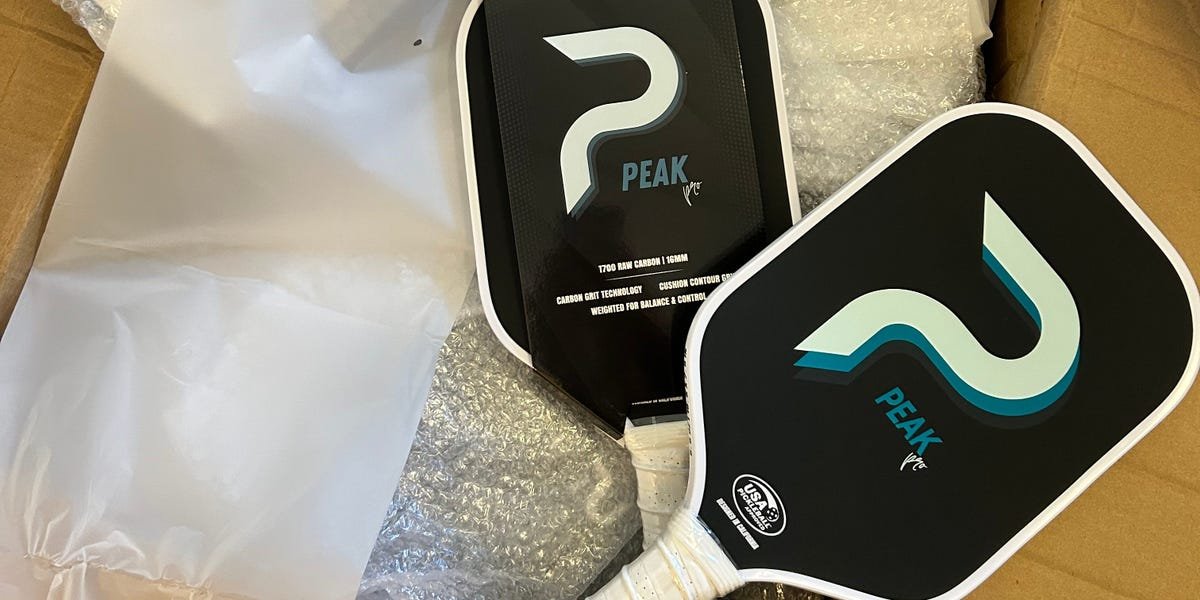
In 2024, inspired by the successful e-commerce entrepreneurs and Amazon sellers I write about, I decided to start my own business. I convinced a friend to join me, and we each put in $5,000 from our own savings to launch a pickleball paddle company. We hired my high school English teacher to design our logo, we worked with a sourcing company to find a manufacturer, and we spent about a year developing our paddle before placing our first inventory order in early 2025. The minimum order quantity was 500 units.
We shipped 250 paddles to ourselves in Los Angeles and sent the other 250 to Amazon.
The plan was to run a hybrid Shopify-Amazon model while we figured out who our typical customer was. That was advice from an e-commerce industry veteran. He told us that, on Shopify, we’d earn better margins because there are fewer platform fees, but we’d have to generate our own traffic through social media, ads, and word of mouth. On Amazon, we’d sacrifice margin, but gain visibility. As he put it: “Amazon is guaranteed traffic. There’s a guaranteed flow of people who are going to see your product every single day.”
After a year, we haven’t cracked the Amazon code, and the learning curve has gotten expensive.
Among the various Amazon seller fees is an “aged inventory surcharge.” It’s charged on units stored in its fulfillment network for 181 days or more, in addition to its standard monthly storage fees. The surcharge increases the longer your inventory sits.
Items aged 181 to 210 days cost $0.50 per cubic foot. At 211 to 240 days, it jumps to $1 per cubic foot. Our inventory, sitting in the 331- to 365-day range, costs $5.90 per cubic foot. We didn’t fully understand the cost structure until it started hitting our bank account.
Here’s a screenshot from our Amazon seller account showing our service fees between November 2025 and February 2026.
Last month, we owed nearly $300 in service fees — much more than we were bringing in in sales. Rather than continue to see that number climb (items aged 456 days or more would cost us $7.90 per cubic foot or $0.35 per unit, whichever is greater), we decided to pull most of our inventory out of Amazon.
The removal process took five minutes. We submitted a removal order for about 200 paddles, and were surprised when 40 of our units arrived on my doorstep the next day. According to Amazon’s website, removal orders can take 90 days or more to process before leaving a fulfillment center, plus another two weeks for delivery.
We’re still waiting on the rest of the inventory, and we haven’t fully escaped fees. There’s a removal fee, which is charged per unit and based on the unit’s shipping weight, that we expect to show up on our next statement. Plus, the 30 or so paddles that we left in Amazon’s warehouse will trigger storage fees.
We don’t want to abandon Amazon entirely; we just don’t have the time and resources to dedicate to figuring out that sales channel.
For now, we’re shifting our focus to Shopify, in-person events, and wholesale partnerships. If we hit another sales dry spell, at least we won’t be paying hundreds of dollars a month just to store our own product.
We’re not discouraged. It’s just one more lesson in our crash course in e-commerce, but it’s a big one: Understand the fees. On Amazon, unsold product isn’t harmless. It’s expensive.
Read the full article here