






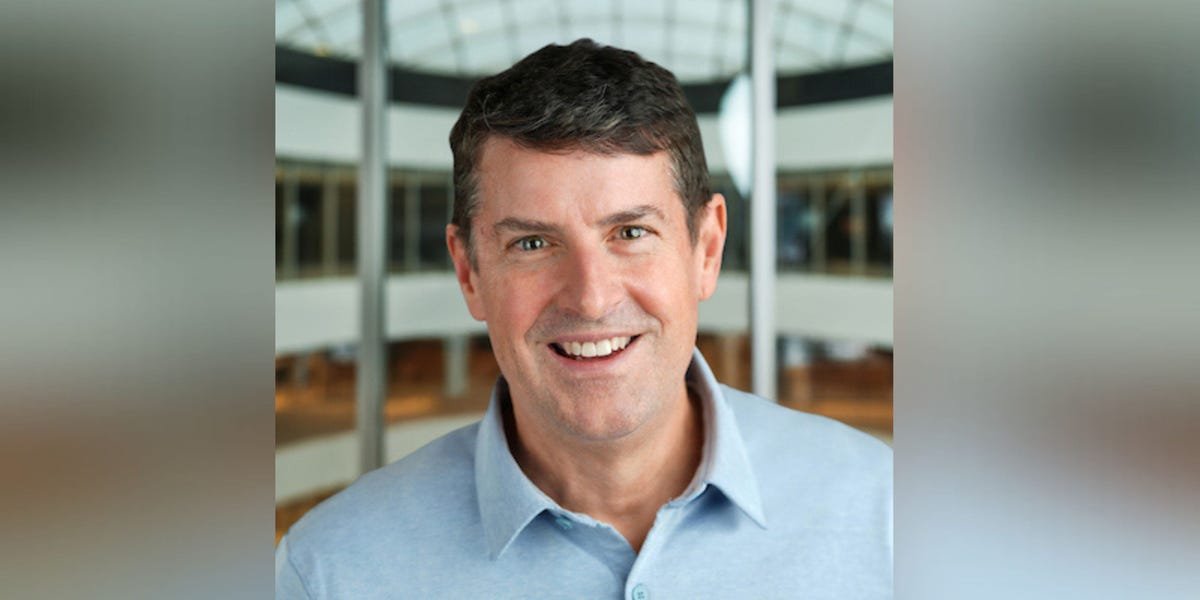


This as-told-to essay is based on a conversation with Jon McNeill, founder of DVx Ventures and former president of sales at Tesla between 2015 and 2018. McNeill published his book, “The Algorithm,” on Tuesday, outlining how to apply the five-step framework in any organization. This interview has been edited for length and clarity.
At Tesla, we developed a five-step framework that established a systematic way to drive innovation with a weekly cadence.
This framework was popularized by CEO Elon Musk as “the algorithm,” and it entails questioning every requirement, deleting every possible step in a process, simplifying and optimizing, accelerating cycle time, and automating last.
When I got to Tesla in 2015, one of the things I brought was a deep experience in “lean manufacturing” or the Toyota Production System.
That system was amazing to help you get breakthroughs in throughput, manufacturing, and processes, but it wasn’t great for innovation. You could innovate around a process and make a process better, but you weren’t going to innovate and create a new product. That’s the difference with the algorithm.
It was designed to supercharge speed, efficiency, innovation, and growth.
The framework doesn’t require you to be Elon Musk. Throughout my book, I talk about people who were doing the work and had major breakthroughs — the casting method that got rid of half the factory, mobile car service repairs, one-page loan documents for cars. All those innovations came from people at Tesla applying this process.
And the team developed this framework largely out of the mistakes we were making. When we over-automated the Model 3 line, causing delays in production, that’s when we decided automating has to be last because it can completely screw up the framework.
The first benefit I got out of the algorithm was focus. It kept us focused on the right thing. The second benefit was we kept getting these innovation breakthroughs because of the framework — and that leads to people saying they’ve done the best work of their lives with this team. That’s really satisfying.
The algorithm’s limits
What I’ve been surprised by is how many different environments this framework applies to. We can apply this to a legacy automaker like General Motors, and we can apply this to a startup.
But for the Algorithm to take hold in an organization, it depends on commitment from the top. You need leadership that’s thirsty for change.
For a certain kind of person, this can bring an environment that’s exhausting for sure.
When we’re recruiting, I literally say to candidates, “Are you ready for this? Because this isn’t a regular army. This is special forces.” And what that means is we are moving with purpose every day, and you’re going to be working with the best of the best of the best.
If you thrive in that kind of environment, you’re going to love this. If you don’t, you’re not going to work out here. You’re going to hate it. It takes a certain kind of weirdo to like this stuff.
The algorithm is a tool that drives innovation, but it isn’t a tool to develop or discover your own leadership style and skillset.
I couldn’t mimic Elon’s leadership style because I’m just not made up that way. I think people would describe my leadership style as collaborative but challenging. I like to be provocative to get teams to a place where they didn’t know that they could go or stretch a bit further than they thought they should or could.
I try to be really kind in that approach because I grew up on a farm in the Midwest in a really small community. I’m not a very good jerk.
You also need to determine what your skill set is.
There was a time in the second-half of 2017 when Elon was really struggling with his mental health. I was trying to help him as much as I could. The team was trying to help him as much as they could.
During that time period, my wife grabbed me and said, “You’re absolutely stressed out,” and “We need to talk about that.”
After she listened to me, she said, “You’re not stressed out about the work at all. You’re stressed out because you’re trying to help somebody in an area that you have zero skills.” And I didn’t.
I was getting stressed out because I was trying to help a friend, and I was making no progress. The root cause was I didn’t have the skills to deal with that.
A lot of people think we can learn just about anything, and in an engineering and business sense, I feel like that this is true for me. But what this experience taught me was that there’s a limit to my learning.
Why I left Tesla had nothing to do with the algorithm, had nothing to do with the pace of Tesla. I loved that job.
I also haven’t applied the algorithm to my personal life. I tried to do this, and it drove my family crazy. I’ve moved stuff around in the kitchen to be more efficient, and my wife would move it right back because it wasn’t aesthetically what she wanted.
But I feel like victory for me in life was, ‘”Are my kids going to want to spend time with me when they’re adults?” That’s kind of my measurement stick, and I’m super glad that they do.
I haven’t put the formula on them. Life’s got a lot more variables for sure.
Read the full article here