







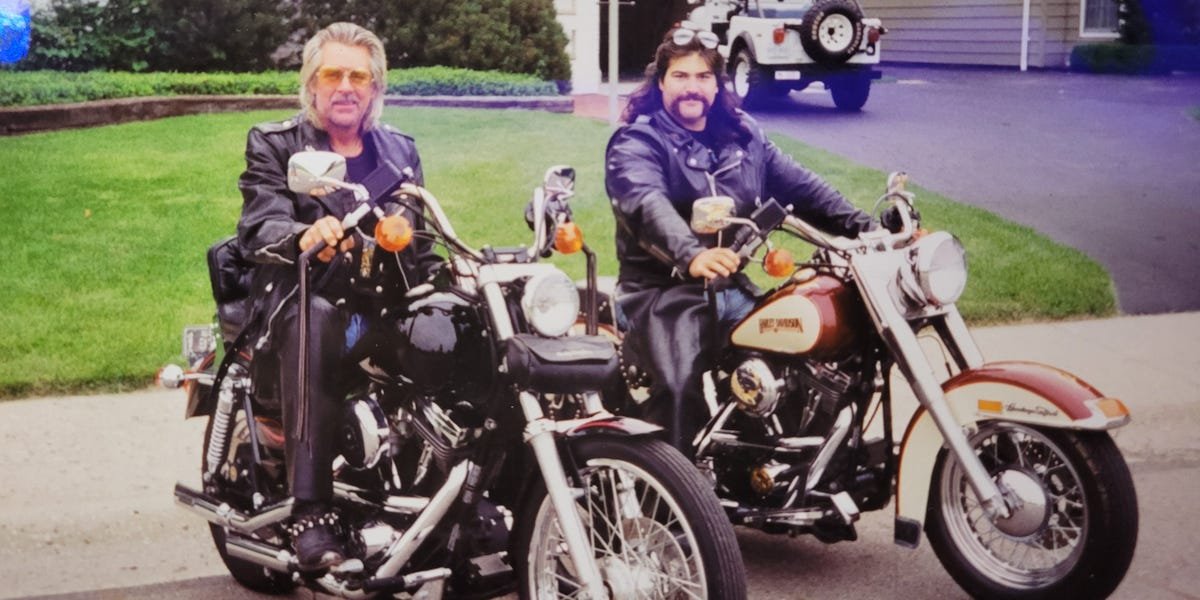


This as-told-to essay is based on a conversation with Frank D’alesio, a former agent for the Bureau of Alcohol, Tobacco, Firearms, and Explosives who spent 25 years infiltrating criminal organizations. It has been edited for length and clarity.
My norm for the better part of 25 years was infiltrating violent criminal organizations, including motorcycle gangs like The Brothers, Vagos, and the Order of Blood.
When you’re undercover, your life runs on a chaotic, but consistent schedule. You know who you’re seeing, what role you’re playing, and how you need to act.
Every day brings different challenges, but with the same routine. That routine for years would be hanging out with criminals in their clubhouses or riding motorcycles with them.
Then, the case would end, and that structure and way of living as someone else would disappear.
In between assignments, I’d sit in a cubicle doing paperwork, but my mind would still be racing, looking for the next challenge.
While undercover, I was constantly observing how someone talked, how they moved, whether they were telling the truth — looking for anything that didn’t add up.
It was paranoia you lived with every day. Did they know who you really were?
That type of awareness doesn’t immediately turn off when the case ends. You’re still reading people and analyzing situations, even when there’s no need to. It becomes hard to trust anyone new.
Plus, I’d spend years building relationships with these people while undercover. I’d talk to them every day and establish that foundation of trust. Then, overnight, it would be gone.
That affects you more than people expect.
There were times when I knew arrests were coming, and I’d think about the guys we were about to take down. For some of them, it was catastrophic for them and their families.
When the case was over, I wasn’t just losing those relationships; I was also losing the person I had become throughout the infiltration.
I’d go back to being myself again, but psychologically, it felt like I’d lost a part of myself. I was told by a psychologist that it equated to someone dying in your family.
Family life doesn’t pause — it moves on
While I was working those cases, I missed a lot with my own family: birthdays, holidays, and school events.
I know that’s part of the job — you spend more time with the people you’re investigating than with your own family. I accepted that.
Still, when I’d come home, my family had already adjusted to me not being around. I’d try to step back into normal routines with them, but it didn’t just click.
There were times when I’d go to something like a school event or a holiday gathering, and I didn’t feel like I fit. I’d be standing there, looking around, thinking about how different this was from what I’d been doing the night before.
Other parents would stare because of how I looked. They had no idea I was actually a good guy. It made me very uncomfortable, but my wife, who is an extra special lady, never said to stop or spoke a word in judgment for the work I was doing.
However, learning how to slow down and be present with my family was something I had to work at — just like anything else.
Over time, I made a conscious effort to rebuild those connections. One of the biggest ways I did that was after I retired; I now work alongside my daughter.
This gives us time together that I hadn’t had before. She has become someone I spend real, consistent time with, not just as a parent, but as someone I could talk to and rely on — my friend.
The hardest part is slowing down
People assume the hardest part of the job is the danger, but it’s not. The hardest part is learning how to live without it and slowing down.
You go from a life where every day has purpose, urgency, and structure to one where things move more slowly and feel less defined. The continued challenges and adrenaline are gone. That’s where the real adjustment happens.
Because once you’ve spent years inside that world, normal life doesn’t feel normal right away. I don’t think it ever will, and only those who have been there understand it.
Read the full article here