







This interview is based on a conversation with Katie Vale, 46, a milliner from Essex, UK. It has been edited for length and clarity.
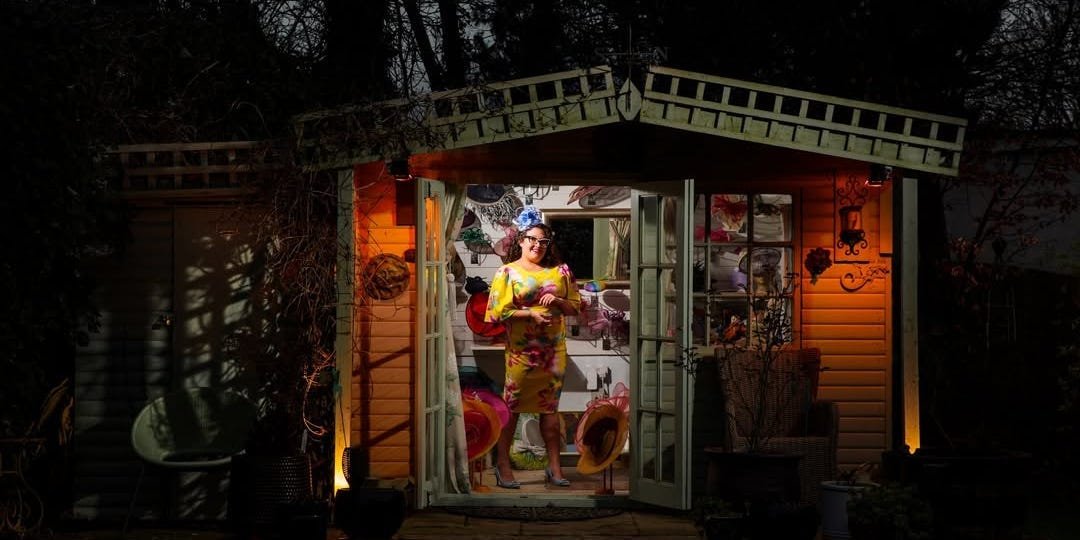
My parents had an 18-square-foot shed built in their back garden in the mid-90s, which served a variety of purposes.
My mother is very creative, and she wanted a space to sit and paint. So it was an artist’s studio for a few years.
Then we put in an air mattress, and it became somewhere people could sleep if the house was full. My nephews treated it like it was their play den when they were little boys.
It always looked cozy and cute. We joked that if I couldn’t afford my mortgage, I could move into the shed and live quite comfortably.
I never imagined that I’d wind up running a business from there.
I used to be a dancer
Millinery — the design, manufacture, and sale of hats — is my third career. I went to a stage school as a child and trained as a dancer. Then, in my early 20s, having suffered quite a few injuries, I was diagnosed with a degenerative condition that put an end to that.
Next, I worked as a duty and incident manager at two of London’s biggest tourist attractions, The London Eye and the O2 Arena. I enjoyed both jobs, but in retrospect, I realize I was craving new opportunities.
In December 2002, I asked for a joint birthday and Christmas present. It was a weeklong millinery course run by a former hatmaker to the British royal family.
I’d been invited to a wedding and was having difficulty finding something that matched my outfit. Everything was either black, cream, navy blue, or pink. I’ve got a big personality and wanted something that would really stand out.
The $330, five-day workshop was so interesting and fun, I was hooked. After that, I could hardly keep away from the workshop, spending weekends and every spare minute from my job — including vacations — making hats.
I was working 70 hours a week in 2 jobs
It was a creative outlet for what I’d lost when I had to stop dancing. The only parts of my body that weren’t affected at that time were my hands and arms.
It was incredibly tactile to work with materials like velvet, beads, and sinamey. I’d pore over fashion magazines and sketch designs. It was the first time in a very long time that I felt genuinely excited.
My first customers were friends and family, but I took on more commissions as the years went by. By 2012, I found myself working over 40 hours a week in my regular job, and another 30 hours of millinery.
Luckily, my management team was very supportive, letting me take extended lunch breaks so I could meet clients for fittings. But it was stressful because I was juggling my main job and side gig.
Then, in October 2012, I was called into the office and let go with four months’ salary. I thought to myself, “Yes!” because I’d been thinking of quitting to launch my own business the following year.
The layoff gave me the push that I needed. I rented a small retail space in a crafts village, where I was located opposite a dressmaker and next to a glassworker who made beads. It was incredibly busy and stimulating.
Everything went well until COVID happened. People were no longer going to weddings or horse racing tracks — the kind of places where they wore my custom-made hats. The pandemic closed the crafts village, and in August 2020, I made the heartbreaking decision to shut my shop for good.
The arrangement was going to be temporary
It was devastating. I’d worked so hard to build my brand and customer base. I didn’t want to completely fold my business, but it was looking like a strong possibility.
Then, my thoughts turned to the joke about Mom and Dad’s garden shed being there in an emergency. Their house was only a five-minute drive from my place, so it was super convenient.
It was definitely on the small side for a studio and showroom, but it would fit my desk and displays, at least temporarily.
“Can I use the shed?” I asked my parents. “We’ll make it work,” they replied. They are very laid-back and helped me get it into the right condition to make my hats and receive clients.
My folks wouldn’t dream of charging me rent, but I’m very strict about paying for takeout whenever we want it. I plow the money I save on rent into the business and the materials I buy to make hats.
The plan was to move somewhere else once COVID was done. But that never happened. I gave birth to my daughter, Verity, in May 2022. Things worked out perfectly because Mom and Dad could babysit my child if needed while I worked. I was only 50 yards from their house.
People appreciate cottage businesses like mine
Four years on, I’m still here. There’s something wonderful about being so close to your family while you work. In the warm weather, I’ll open the doors of the shed and watch Verity, nearly 4, cycling happily around the garden.
She’s at nursery school now, and I tend to only work during school hours. However, my parents will step in if I ever need to work a weekend or be in the studio when school is out. They love taking Verity on little trips, even just to the park.
At first, I thought people might be turned off by the idea of a millinery based in a shed. But, post-COVID, they seem to appreciate cottage businesses like mine. In fact, a lot of customers who’ve been with me for years say they prefer it to the shop.
It’s a lot more personable. They’ll often get a guided tour of the backyard if my mum or dad is around. Dad will offer gardening advice if they’re having problems growing a particular plant. They’ll leave with a bunch of cuttings.
It’s funny to think that I’m running a global business — I ship my hats and fascinators all over the world — from a little shed. It was only meant to be temporary, but it’s become something of a trademark.
We’ve just started dismantling the studio and replacing it with a new shed because it’s getting quite rickety. The business expanded, and the studio had to catch up.
I’m looking forward to the extra space, but it’s all about the location. I never want to leave.
Read the full article here