







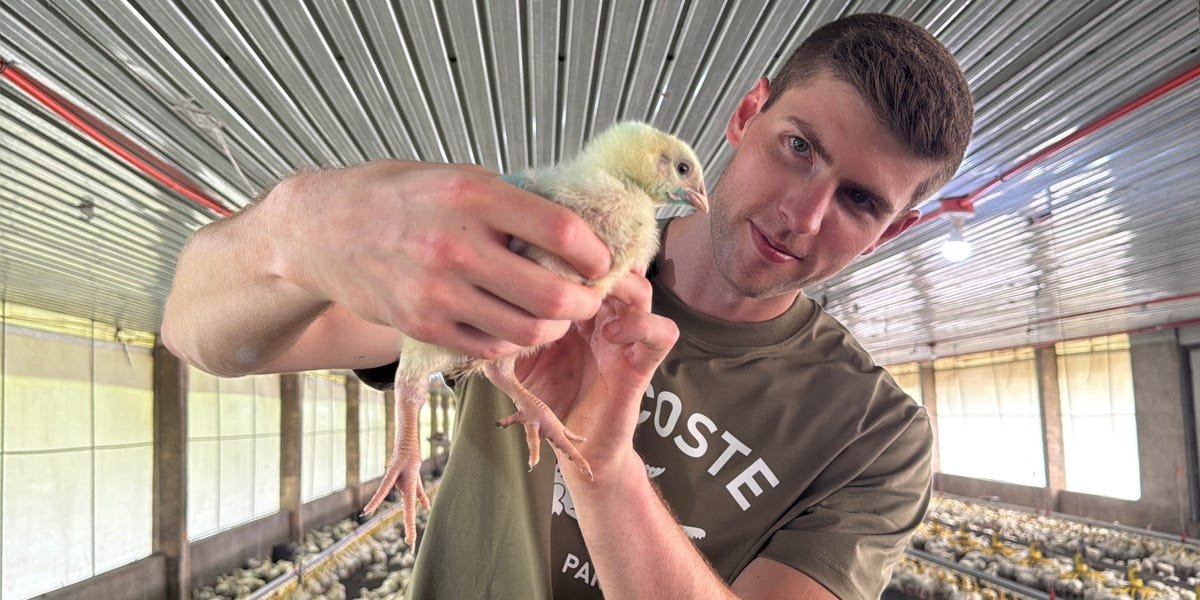


This as-told-to essay is based on a conversation with Andrew Fletcher, 27, a Canadian banker-turned-chicken farmer based in the Philippines. It has been edited for length and clarity.
I came from working in a corporate office in downtown Toronto. I’d iron my shirt every day and wear a suit and tie. And now I’m getting my hands dirty every day as a chicken farmer in the Philippines.
After two years in corporate banking, I quit my job and set up a farm in the Philippines with my life’s savings.
Fatigued by the corporate grind
I grew up in Nova Scotia, a small province in Canada, and moved to Ontario for an MBA program.
At 23, I landed a corporate banking job in Toronto at Scotiabank, one of the Big Five banks in Canada, earning a steady paycheck of 150,000 Canadian dollars yearly. I did deals-based work, meeting with C-suite level leaders in companies.
If you had told me when I graduated from high school that I’d be in Toronto in that role, making the money I did, I would have been completely elated.
But the novelty wore off very quickly. The days started turning into months, then into years, and I realized, this is becoming very repetitive. I felt like you could copy and paste me into any building in Toronto, and I would be the same as everyone else.
One thing I hated was people around me consistently wishing away their time. When Monday starts, people say, “Oh, I can’t wait for the weekend,” or “I can’t wait for my next vacation.”
My partner’s family is from the Philippines, and they work in the poultry business. I really had a good pulse on the business and the industry in the Philippines, which is what made me think, this is a place where I can grow my money and start something of my own.
I quit my banking job in August and moved to Quezon province, the Philippines, in October.
No book to follow on how to farm chickens
Chicken farming is a pretty unique business. I didn’t know where to start because there are almost no educational resources online.
I looked for books on how to run a farm like this and raise chickens, and found nothing. So I just kind of showed up and started, leaning heavily on two farm hands I’d hired to teach me the ropes.
I’m putting $100,000 of my savings into a farming plot on my partner’s family’s land, which is now under construction. In the meantime, I’m renting another smaller farm to learn how it works. It can hold about 15,000 chickens at once.
Taking care of chicks is a 24-hour job, and you have to maintain a controlled environment. You can’t go away for a weekend and leave them there to fend for themselves. If a fan breaks, or the power goes out for an hour, you could literally lose all the chicks and your money for the cycle.
While I don’t always have to be on the ground, I like to get hands-on. Sometimes, I’m at the farm at four in the morning, feeding the chickens, raking the litter, or carrying 100-pound bags of feed.
Diving headfirst into a very different business environment
What I didn’t realize was how different the Philippines’ business environment would be. The biggest change is that people work and run businesses here with zero technology.
I come from four years of work in finance, using tools like Microsoft Excel. Here, there are some big farms where you won’t find a single computer.
The second thing is that it’s a very cash-heavy society, which makes it really challenging to track monthly spending. I spend about CAD$5,000 monthly on farm maintenance.
Lastly, I didn’t realize how important food is to Filipinos.
I pay my workers a salary, but also things like food. When you harvest the chickens, you’ll have 20 people show up, and then you’re giving everybody food. If you have a contractor come to your house, you’re probably making them dinner.
I think North America can take a page out of that book. People here are willing to help other people, and Filipino hospitality is out of this world.
Rebuilding a life halfway across the world
Rebuilding a social circle here has been tough. I’m struggling with the language barrier, I miss my family, and I never thought I’d say this, but I missed seeing snow over the winter.
But there are some real advantages, like paying only CA$500 for rent, eating CA$1 meals daily, and feeling like I’m building something of my own.
I’m only four months into being a business owner, and I haven’t yet seen any money flow in. But I’m looking ahead in years rather than weeks and months. Maybe I’ll have a really bad month, but if in five or 10 years the trajectory is upward, then it’s working.
Even if everything goes downhill, I wouldn’t regret it. At least I tried.
Read the full article here