








Elon Musk unveiled more details on his Terafab plans on Saturday evening — and the Tesla CEO has an ambitious vision for the project.
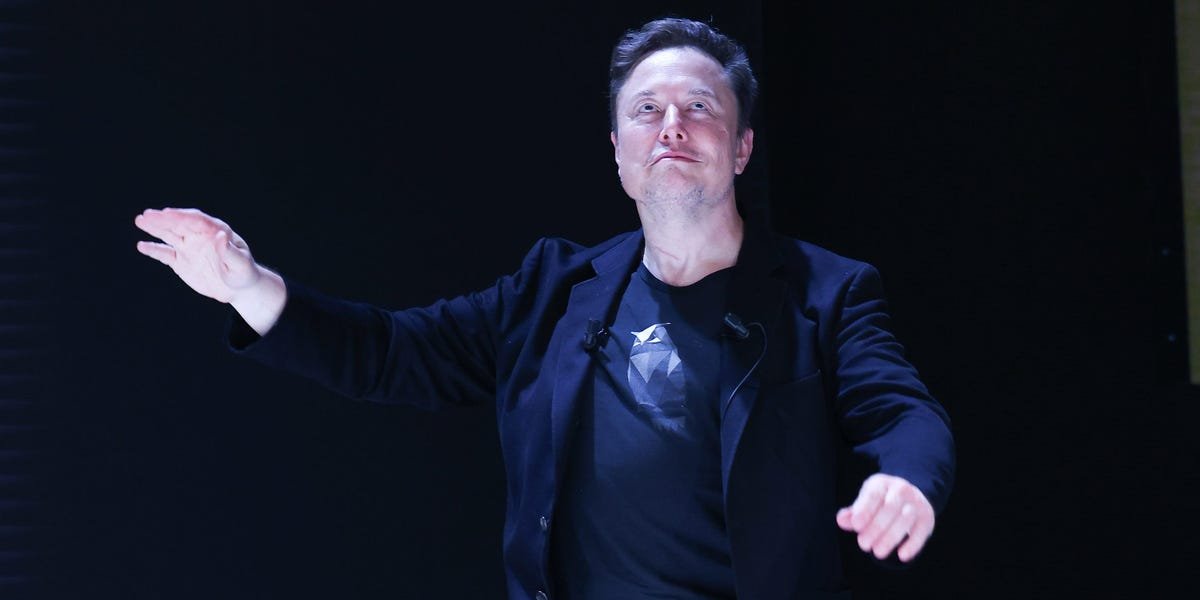
“We’re starting a galactic civilization,” Musk said, speaking from the defunct Seaholm Power Plant in Austin.
The Terafab is Musk’s giant chip manufacturing venture between his companies, Tesla and SpaceX. XAI is also included as the AI startup was acquired by Musk’s space company in February.
The idea of developing a chip manufacturing plant alone is “herculean,” as Morgan Stanley’s semiconductor analysts wrote in a recent note. The amount of money it would take, along with the technical know-how and specialized tools required, is why the industry is split into fabless designers like Nvidia and foundries like TSMC.
Musk said on Saturday that the Terafab is not only necessary to scale robotaxis and Optimus, Tesla’s humanoid robot, but also to deploy space-based compute. The CEO said the fab will develop chips “designed for space” in order to deploy solar-powered AI satellites.
Here are some takeaways from the announcement.
An all-in-one chip plant
Musk said the Terafab will be a comprehensive plant that will have all the necessary equipment to test, revise, and manufacture the chip.
The CEO is essentially proposing to put some of the validation stages of chip development that are typically done outside a fab plant under one roof.
“To the best of my knowledge, this doesn’t exist anywhere in the world where you’ve got everything necessary to build logic, memory, and do packaging, and test it, and then do masks, improve the masks, and keep looping it,” Musk said.
2 kinds of chips
There will be two kinds of chips the Terafab will make, according to Musk.
One will be designed primarily for Optimus and Tesla’s vehicles, which are being built and trained to be fully autonomous. Musk said the chip will “especially” be for Optimus because he expects the volume of units to be 10 to 100 times more than the volume of cars.
The other chip, called D3, will be specialized for space environments. The CEO said he expects most of the data centers to be housed in lower orbit, requiring the need for a solar-powered AI satellite.
Musk said the cost of deploying AI in space will drop “below the cost of terrestrial AI” in part because space is always sunny, giving way to more power.
“So as soon as the cost to orbit drops to a low number, it immediately makes extremely compelling sense to put AI in space,” he said. “It becomes a no-brainer, basically.”
Mini AI satellites
Part of Musk’s vision for a distributed AI computing network lies in space.
He revealed a concept design of a mini AI satellite, with each one attached with solar power to deliver 100 KW power capacity.
In the future, Musk predicted that satellites would reach the megawatt range.
The CEO said these satellites are ideal because no one wants AI computing centers “in their backyard.”
Petawatts and other moonshots
Musk proposed that in the future, his companies could establish an industrial base on the moon.
That will unlock the ability to create petawatts of AI compute — 1,000 times more than a single terawatt, he said.
The CEO also envisioned free trips to Saturn in a post-scarcity economy where everything is free.
Musk acknowledged the outlandish nature of his “abundance” proposal: “This looks a bit like the opening of Idiocracy with Mike Judge.”
Read the full article here