







The “Big Beautiful Bill” that passed last year made a lot of tax changes in relation to car purchases that consumers who qualify could take advantage of if they buy certain vehicles assembled in the United States.
The bill removed the federal tax credit of up to $7,500 on the purchase of qualifying electric vehicles, but in its place is a new deduction that allows taxpayers to claim up to $10,000 a year on interest paid on loans to buy a new American-made car purchased between Jan. 1, 2025 and Dec. 31, 2028.
Since most people do not pay $10,000 in interest on a car loan each year, the typical annual savings will vary on what you do pay and your income tax rate, but experts have told the Detroit Free Press, part of the USA TODAY Network, that those new car buyers who typically qualify for it might see an annual tax savings from $300 to $900. Car buying experts expect the credit will incentivize more shoppers to seek out vehicles that qualify for the tax deduction.
“While affordability is typically the most important factor for consumers when buying a car, our research shows that due to ongoing tariff news and now adding this tax incentive to the mix, Americans are more motivated to understand where a car is built,” Patrick Masterson, shopping website Cars.com’s lead researcher for the American-Made Index, told the Detroit Free Press.
Rules for the New Car Loan Deduction
There are stipulations to qualify for the deduction, which are outlined on www.IRS.gov. They include that only new vehicles qualify — used cars do not qualify. Also, the cars must be bought — not leased, leases don’t qualify — and used primarily for personal use to qualify for the car loan deduction.
Single taxpayers with up to $100,000 in modified adjusted gross income and married couples earning up to $200,000 are eligible. Modified adjusted gross income is adjusted gross income plus tax-exempt income. The IRS explains how to calculate it here on its website. The amount taxpayers can write off is reduced by $200 for each $1,000 in income above those income limits.
The vehicles that qualify for the loan deduction can be a car, minivan, van, SUV, pickup or motorcycle as long as they have gross vehicle weight rating of less than 14,000 pounds, the IRS states. That means most heavy-duty trucks will not qualify, Masterson said.
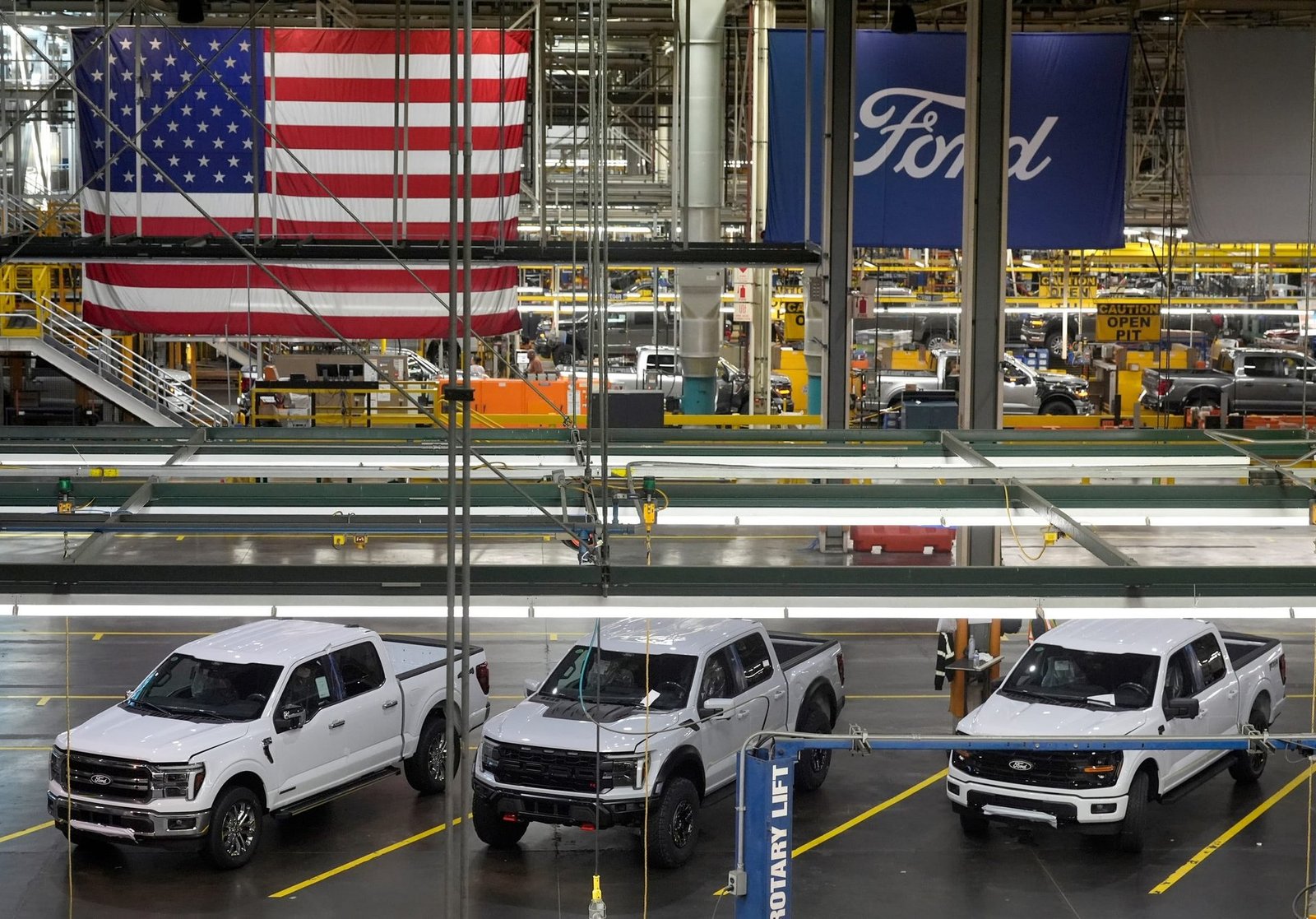
Most notably, the vehicle has to have undergone final assembly in the United States — that means where it is physically put together before it is shipped to a dealer.
Some Vehicles That Qualify
“There are three sure ways consumers can find a vehicle that meets the criteria for this incentive,” Masterson said. “First, check the vehicle identification number (VIN); if it starts with a 1, 4, or 5, it was assembled in the U.S. and therefore meets the minimum for the incentive.”
For those looking for a starting point, shoppers can look on Cars.com’s 2025 American-Made Index. The 2026 index will debut in June and it will likely have some changes to it as some cars made in the United States ended production last year, such as the Ford Escape. Or assembly of other vehicles was brought into the United States due to President Donald Trump’s 25% tariffs on imported vehicles.
But here are the 10 vehicles for this year that Masterson said he believes will be among dozens of others to qualify:
- Tesla Model Y
- Ford F-150
- Lincoln Aviator
- Chevrolet Corvette
- Honda Passport
- Jeep Gladiator
- Dodge Durango
- Volkswagen ID.4
- Toyota Corolla Cross
- Acura MDX
Masterson said if shoppers start on a third-party website such as www.cars.com, its dealers include VINs for the vehicles they list.
Another option to see whether a vehicle qualifies is to look at the Monroney sticker on the new car’s window to see where it had its final assembly. Also, you can find the plant where the vehicle was manufactured by entering the Vehicle Identification Number on the National Highway Traffic Safety Administration’s website at www.nhtsa.gov.
How To File for the Deduction
If the vehicle was assembled in the United States, the buyer must include the VIN on Schedule 1-A to claim the deduction, according to Detroit Free Press personal finance columnist Susan Tompor, who said to look at the top of page 2 of Schedule 1-A dubbed “No Tax on Car Loan Interest.”
Tompor said a taxpayer should claim the “total additional deductions” from Schedule 1-A, line 38, on your 1040 form, line 13b. A person can claim the car loan interest deduction if they do the standard deduction or if they itemize other deductions on Schedule A.
Masterson said car buyers will have to do the math to see whether they will get a better financial deal by buying a car that had final assembly in the United States and taking what they can in the tax deduction or buying an import that might have better incentives attached to it. It also comes down to what they value in terms of where the car is made.
“Though you can save up to $10,000, there’s no one conclusive answer because a lot of this depends on the consumer, their credit and what they are spending on a vehicle,” Masterson of the potential savings in interest consumers might realize. “It’s really a moving target because not everyone is paying the same or in the same boat financially.”
Jamie L. LaReau is the senior autos writer for USA TODAY Co. who covers Ford Motor Co. for the Detroit Free Press.
This article originally appeared on Detroit Free Press: Does your car qualify for up to a $10,000 tax deduction? It might
Reporting by Jamie L. LaReau, Detroit Free Press / Detroit Free Press
USA TODAY Network via Reuters Connect
Read the full article here