








Are you using AI to think — or letting it think for you?
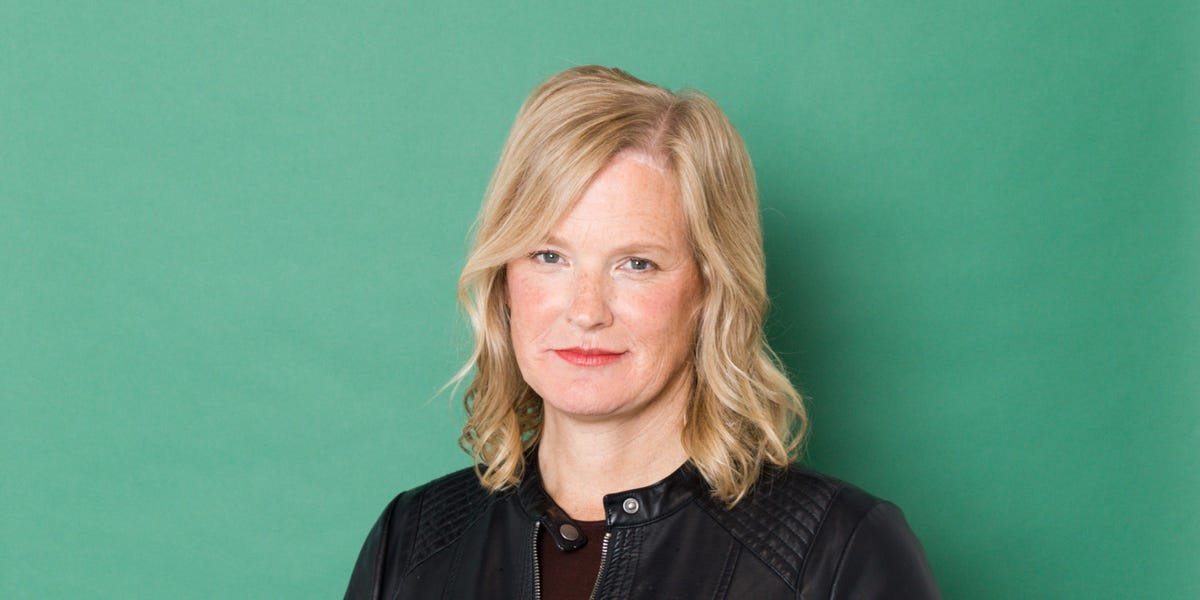
Vivienne Ming, chief scientist at the Possibility Institute, a metascience research group, and founder of Socos Labs, an AI and education firm, says the tech is splitting people into two groups: a small minority who use it to think better, and a much larger majority who use it to think less.
“The overwhelming trend is substitution,” Ming said in a recent interview with Business Insider in London. Instead of using AI to deepen their reasoning, most people are outsourcing it, she said.
That distinction is what Ming describes as a growing cognitive divide between people who use AI to enhance their thinking and those who rely on it to think for them.
As AI tools become embedded across workplaces, from coding to writing and analysis, a growing number of AI researchers have warned that overreliance on the technology could dull cognitive and independent thinking skills.
Every time Thibault publishes a story, you’ll get an alert straight to your inbox!
Stay connected to Thibault and get more of their work as it publishes.
The risks are already emerging: when Anthropic’s Claude went down earlier this month, some developers said they struggled to keep working, as tasks that had become routine suddenly felt harder without AI.
‘Productive friction’
To test AI’s impact on cognitive skills, Ming said she ran an experiment from late summer through fall of 2025. She created teams of three, including 39 students from UC Berkeley and 33 others from the San Francisco Bay Area, to use Polymarket data to predict real-world events, either working alone or with AI systems.
The results, she said, showed roughly 90% to 95% of participants fell into two groups: those who relied on AI to generate answers for them, and those who used it to validate their own assumptions.
The remaining minority — around 5% to 10% — took a different approach, which Ming calls the “cyborgs.”
Rather than relying on AI for answers, they used it as a collaborator, exploring ideas, challenging assumptions, and pushing the problem forward, while the AI brought in data and counterarguments.
The process created what Ming described as “productive friction.”
“They would challenge the AI,” she said, and ask, “Don’t tell me why I’m right — tell me why I’m wrong.”
‘Hybrid intelligence’
This dynamic is what Ming calls “hybrid intelligence” — not simply humans plus machines, but a distinct form of intelligence that emerges from how the two interact.
In her research, she found that the best human-AI collaboration wasn’t driven by more advanced large language models but by human traits such as curiosity, intellectual humility, perspective-taking, and the ability to reason under uncertainty.
Her concern is that most current uses of AI push people in the opposite direction.
Ming compares it to GPS: a tool that makes your life easier in the short term but can degrade cognitive abilities over time if overused.
“If you’re using it to think for you,” Ming said of AI models, “this is your long-term cognitive health. So yes, 100% skill erasure.”
The implications extend beyond individuals. Workplaces increasingly reward speed and efficiency — conditions that encourage employees to accept AI-generated outputs rather than interrogate them.
That, Ming warned, could lead to a world of competent but indistinguishable work, or what she called “AI slop.”
“The answer you’re getting out of your phone is the exact same answer everyone else is getting,” she said. “Even if it’s right, it brings you no value.”
Read the full article here