









A new proposal in Congress would prevent companies from cutting special deals to keep prices high, including on your next Uber Eats order.
The Fair Prices for Local Businesses Act, set to be introduced on Thursday by Democratic Sen. Chris Murphy of Connecticut, would bolster existing laws meant to prevent large companies from striking better deals with suppliers than their smaller rivals.
“For decades, corporations have been allowed to break the law and rig the system to make small businesses pay higher prices for the exact same products,” Murphy said in a statement.
The bill would make changes “providing both small businesses and federal regulators with a larger set of legal tools to punish corporations” when they strike such deals, he said.
Murphy’s bill comes after a Federal Trade Commission lawsuit unsealed last year, which alleged that soda- and snack-maker PepsiCo tried to help Walmart underprice its rivals.
Every time Alex publishes a story, you’ll get an alert straight to your inbox!
Stay connected to Alex and get more of their work as it publishes.
While it’s common and legal for suppliers to offer discounts to large retailers that buy more than smaller ones, the FTC’s lawsuit said PepsiCo went further by tracking what Walmart’s rivals were charging for its products and trying to raise prices at those stores to defend Walmart’s market position. The lawsuit, filed during the Biden administration, was dropped after President Donald Trump started his second term.
Walmart and PepsiCo previously said their actions complied with the law and that they were trying to offer low prices to their customers.
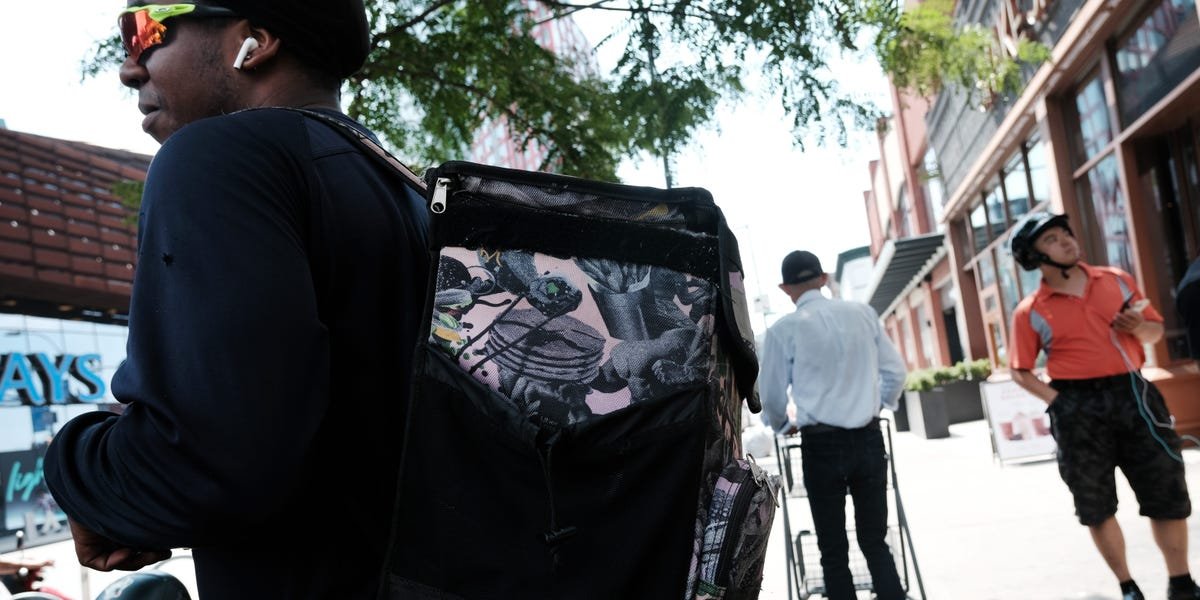
Murphy said Thursday’s bill would prevent similar cooperation between big chain retailers and their product suppliers. The bill would also apply the same protections to services such as food delivery apps, including Uber Eats and DoorDash, preventing them from striking similar deals with large chains over smaller rivals.
“Local shops and restaurants would no longer pay higher costs for services like delivery apps, point of sale systems, and credit card swipe fees,” a summary of the bill provided by Murphy’s office reads.
Federal antitrust authorities haven’t made price manipulation claims against delivery apps. These services charge restaurants and retailers fees to sell through their marketplaces. Uber Eats, which said earlier this month that it would increase its fees, charges up to 30% per order, for instance.
Business Insider has reached out to the major delivery apps for comment on the bill.
Murphy’s bill would need support from multiple Republican senators to pass the GOP-led Senate.
It has drawn support from groups that advocate for small businesses, including Small Business Rising, a coalition of about two dozen trade groups, such as the Independent Restaurant Coalition and the Independent Natural Food Retailers Association.
The bill would update the Robinson-Patman Act, which became law in 1936 and was intended to prevent wholesalers from charging different prices to different businesses for the same goods.
Since the act’s passage, though, “legal loopholes, narrow interpretations, and burdensome requirements have made it challenging to enforce this important law,” Small Business Rising wrote in a letter supporting Murphy’s bill said.
Do you have a story to share about delivery apps like Uber Eats or DoorDash? Contact this reporter at abitter@businessinsider.com or via encrypted messaging app Signal at 808-854-4501. Use a personal email address, a nonwork WiFi network, and a nonwork device; here’s our guide to sharing information securely.
Read the full article here