






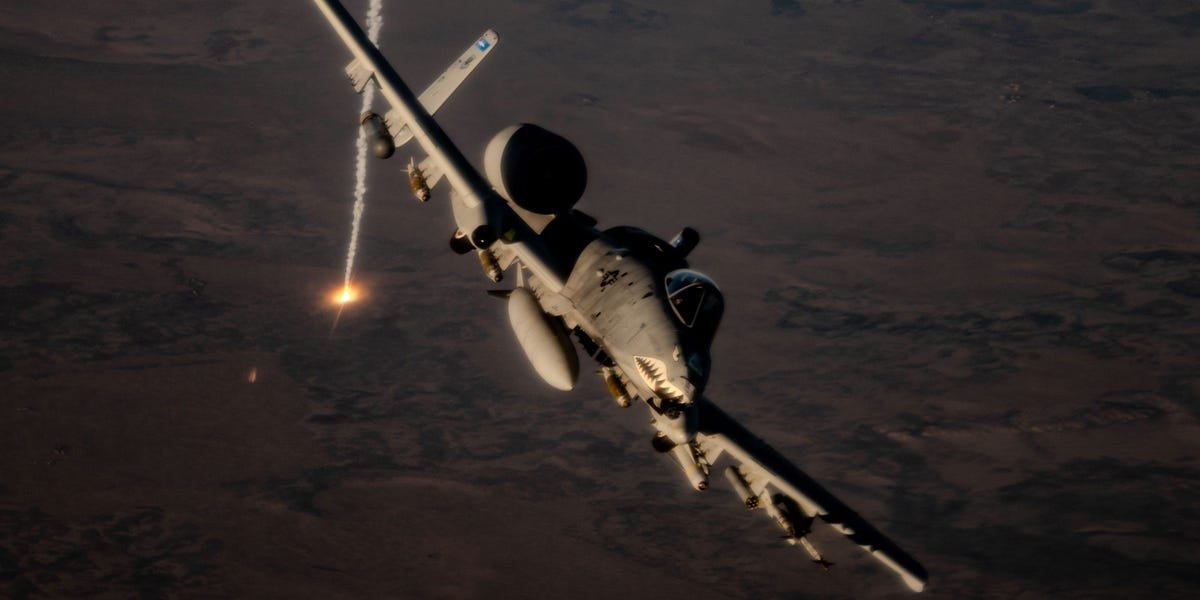


US Air Force A-10 Warthogs are now chasing down Iranian fast-attack boats in the Strait of Hormuz, the top US general said Thursday.
At a Thursday press briefing, Air Force Gen. Dan Caine, the chairman of the Joint Chiefs of Staff, discussed operational updates as the conflict stretches into its third week, revealing that A-10 Thunderbolt II attack aircraft are “now in the fight.”
He said that these aircraft are “hunting and killing fast-attack boats in the Straits of Hormuz.” Caine added that US forces are flying further into eastern Iranian airspace, targeting Iran’s one-way attack drone hubs.
Tehran has disrupted the flow of crude oil through the Strait of Hormuz, a narrow strip of water connecting the Persian Gulf and the Gulf of Oman and offering access to the Arabian Sea and beyond. The strait is one of the world’s busiest oil shipping lanes. The severe disruption has resulted in a serious spike in crude oil prices.
US officials have said Iran is using vessels like its fast attack boats to deploy naval mines in the strait, threatening vessels traveling through the waterway.
The A-10 Warthog’s role in the war comes amid its planned retirement, which the Air Force expedited from later this decade to fiscal year 2026. For now, though, over 160 Warthogs remain in service.
The A-10, more commonly known as the Warthog, is a close-air support aircraft that was introduced in the 1970s; it was intended as a tank-killer able to blunt a Soviet armored assault. Though it carries rockets, missiles, and bombs, the aircraft is best known for its 30mm GAU-8 Avenger seven-barrel Gatling-style autocannon.
Air Force leadership has previously said the A-10’s retirement is necessary because “the aircraft does not deter or survive against our pacing challenge,” a reference to China. The service has been looking to F-35A Lightning II stealth fighters to fulfill A-10 missions.
During the Pentagon’s Operation Epic Fury update, Caine also said AH-64 Apache attack helicopters “have joined the fight on the southern flank” as well, including helicopters flown by US allies, “to handle one-way attack drones.”
Apache helicopters have also been striking Iranian-aligned militia groups in Iraq, he added, to suppress threats in the country against the US.
Similar to the Warthogs, US military leaders have suggested the Apache is losing its edge.
Last year, the Army’s deputy chief of staff for operations, plans, and training said that the Delta variant is no longer “a war-winning capability that we can fight with and win today.” Even the more advanced Echos, he said, are “on the cusp of being capabilities where we don’t necessarily see them contributing to the fight the way they have done perhaps in the past.”
The Army has been largely reconsidering the role of crewed helicopters and looking into reducing the number of crewed assets and replacing them with a greater number of uncrewed combat platforms.
Read the full article here