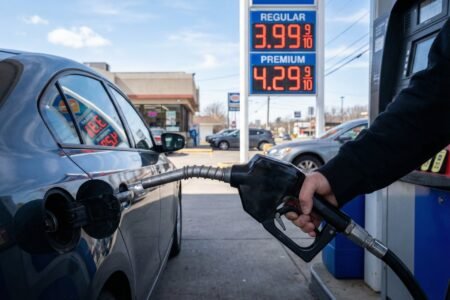








You pull up to the pump, watch the numbers spin, and wonder if there is a better way to manage this recurring expense. Gasoline takes a significant bite out of your budget, but you have more control over your fuel efficiency than you might realize.
By tweaking how you drive and maintain your vehicle, you can stretch the distance between fill-ups and keep more cash in your wallet.
1. Ease up on the accelerator
Slamming your foot on the gas pedal might get you to the next stoplight a second faster, but it actively drains your tank. Aggressive driving — which includes rapid acceleration and hard braking — can lower your highway gas mileage by roughly 15% to 30%.
Treat the pedal gently. Imagine there is an egg between your foot and the gas pedal to train yourself into smoother takeoffs.
2. Stick to the speed limit
Vehicles are designed with an optimal fuel efficiency range. For most cars, gas mileage peaks right around 50 miles per hour. As your speed creeps higher, aerodynamic drag increases exponentially. Driving faster than the limit reduces your fuel economy significantly.
Observing the speed limit is not just about safety — it is a direct way to save money.
3. Anticipate traffic and coast
Pay attention to the road ahead. If you see a red light or a stop sign in the distance, take your foot off the gas early and let the vehicle coast. Racing to a red light only to slam on the brakes forces your engine to work harder for no reason.
Smooth deceleration conserves the momentum you have already built.
4. Combine your errands
Your engine operates most efficiently when it is fully warmed up. Taking several short trips spread across the day forces your vehicle to start cold multiple times, which consumes extra fuel. Group your errands together into one seamless trip.
This strategy keeps the engine at its optimal operating temperature and reduces the total miles you drive.
5. Turn off the engine instead of idling
Leaving your car running while you wait outside a store or sit in a long drive-thru line burns through fuel without moving you an inch. Idling can waste up to a half-gallon of gas per hour depending on engine size and use of air conditioning.
If you anticipate sitting parked for more than a minute, turning the engine off is the smarter financial choice.
6. Use cruise control on the highway
Maintaining a perfectly steady speed manually is difficult. Tiny fluctuations in pressure on the gas pedal burn unnecessary fuel. Engaging cruise control on flat highways keeps your speed consistent, which maximizes your fuel efficiency.
However, skip this feature on hilly terrain, as it may cause the engine to accelerate harder than necessary to crest a hill.
7. Lighten your load
Every extra pound your car carries forces the engine to work harder. Keeping heavy items like tools, sports equipment, or bags of soil in your trunk lowers your fuel economy.
An extra 100 pounds can reduce your gas mileage by about 1%. Clean out your cabin and trunk regularly to keep the vehicle as light as possible.
8. Remove empty roof racks
Aerodynamics play a massive role in fuel consumption. Roof racks, cargo boxes, and bike carriers create wind resistance. Even an empty rack forces your engine to burn more fuel to push the vehicle through the air.
If you are not actively hauling gear, take the hardware off the roof.
9. Check your tire pressure
Under-inflated tires increase rolling resistance, meaning your car has to expend more energy to move forward. Keeping your tires inflated to the manufacturer’s exact specifications can improve your gas mileage by up to 3%.
Check your tire pressure monthly, as temperature shifts naturally cause the pressure to fluctuate.
10. Roll up windows at highway speeds
When you drive fast with the windows down, the air rushes into the cabin and acts like a parachute. This creates drag.
If you are traveling on the highway, rolling the windows up and running the air conditioner on a low setting is generally more efficient than fighting the wind resistance of open windows.
11. Manage your air conditioning strategically
While running the AC on the highway makes sense, it is still a drain on the engine. When you are driving at lower speeds around town, the aerodynamic drag from open windows is minimal. In stop-and-go traffic, roll the windows down and turn the AC off to ease the load on your engine.
12. Keep up with routine maintenance
A well-maintained car is an efficient car. Simple fixes like replacing a clogged air filter, using the manufacturer-recommended motor oil, and ensuring your wheels are properly aligned all contribute to better fuel economy.
Neglecting basic maintenance forces the engine to overcome internal friction and resistance, which costs you at the pump.
13. Hunt for the best prices
Improving your car’s efficiency is half the battle; the other half is paying less for the fuel you do need. Gas prices can vary by dozens of cents within a few miles. Use navigation apps to locate the cheapest stations along your normal route.
To maximize your savings, consider downloading a cash-back app like Upside. It connects you with participating gas stations in your area and gives you cash back on every gallon you buy.
Combine that with a free grocery store rewards program, and you can lower your effective price per gallon significantly.
Maximizing your miles
You do not need to buy a brand-new hybrid to reduce your transportation costs. The habits you practice behind the wheel and the care you give your vehicle dictate how often you have to visit the gas station.
Pick a few of these strategies to try this week, and watch how much farther a single tank can take you.
Read the full article here